Wondering about the many purslane health benefits? The purslane omega 3 content is high for a tasty, easy-to-grow weed.
Common in our yards but little known in the North American kitchen, purslane is both delicious and exceptionally nutritious. Common purslane (Portulaca oleracea) — also known as duckweed, fatweed, pursley, pussley, verdolagas and wild portulaca — is the most frequently reported “weed” species in the world. It can grow anywhere that has at least a two-month growing season.
Until recently, most research on purslane has focused on its eradication. A frequently overlooked approach to controlling this weed is to eat it! Purslane is so surprisingly tasty, North Carolina market gardener Patryk Battle says, “I have rarely had anybody not buy purslane after they’ve tried it.”
Purslane is somewhat crunchy and has a slight lemony taste. Some people liken it to watercress or spinach, and it can substitute for spinach in many recipes. Young, raw leaves and stems are tender and are good in salads and sandwiches. They can also be lightly steamed or stir-fried. Purslane’s high level of pectin (known to lower cholesterol) thickens soups and stews.
Battle also uses purslane in pesto. He throws basil and purslane (upper stems and all) into a blender or food processor, adds a small amount of olive oil, garlic, pine nuts and enough hot water to get a good consistency. Because it’s so juicy, purslane helps create a low-fat pesto without too much oil.

A Nutrient-Rich Weed
Purslane may be a common plant, but it is uncommonly good for you. It tops the list of plants high in vitamin E and an essential omega-3 fatty acid called alpha-linolenic acid (ALA). Purslane provides six times more vitamin E than spinach and seven times more beta carotene than carrots. It’s also rich in vitamin C, magnesium, riboflavin, potassium and phosphorus.
Omega-3s are a class of polyunsaturated essential fatty acids. Your body cannot manufacture essential fatty acids, so you must get them from food. Unfortunately, the typical American diet contains too few omega-3s, a shortage that is linked to a barrage of illnesses including heart disease, cancer and Alzheimer’s disease.
ALA is most commonly found in plants and grass-fed meat and eggs. Artemis Simopoulos, co-author of The Omega Diet, says purslane is one of the richest known plant sources of ALA: It contains 15 times the amount found in most iceberg lettuce.
In addition to ALA, other omega-3s include eicosapentaenoic (EPA) and docosahexaenoic (DHA) acids mostly found in aquatic plants and animals, especially oily fish. Nutritionists now think all forms of omega-3s need to be plentiful in our diets plants such as purslane may be part of the missing link to better nutrition. Ethnobiologists — scientists who study the relation between primitive human societies and the plants in their environment — believe that the plants humans ate long ago provided a greater proportion of nutrients than the plants we consume today. They estimate, for instance, that humans 40,000 to 10,000 years ago consumed an average of 390 milligrams per day of vitamin C from wild plants and fruits. In contrast, the average American today consumes just 88 milligrams of vitamin C per day. One cup of cooked purslane has 25 milligrams (20 percent of the recommended daily intake) of vitamin C.

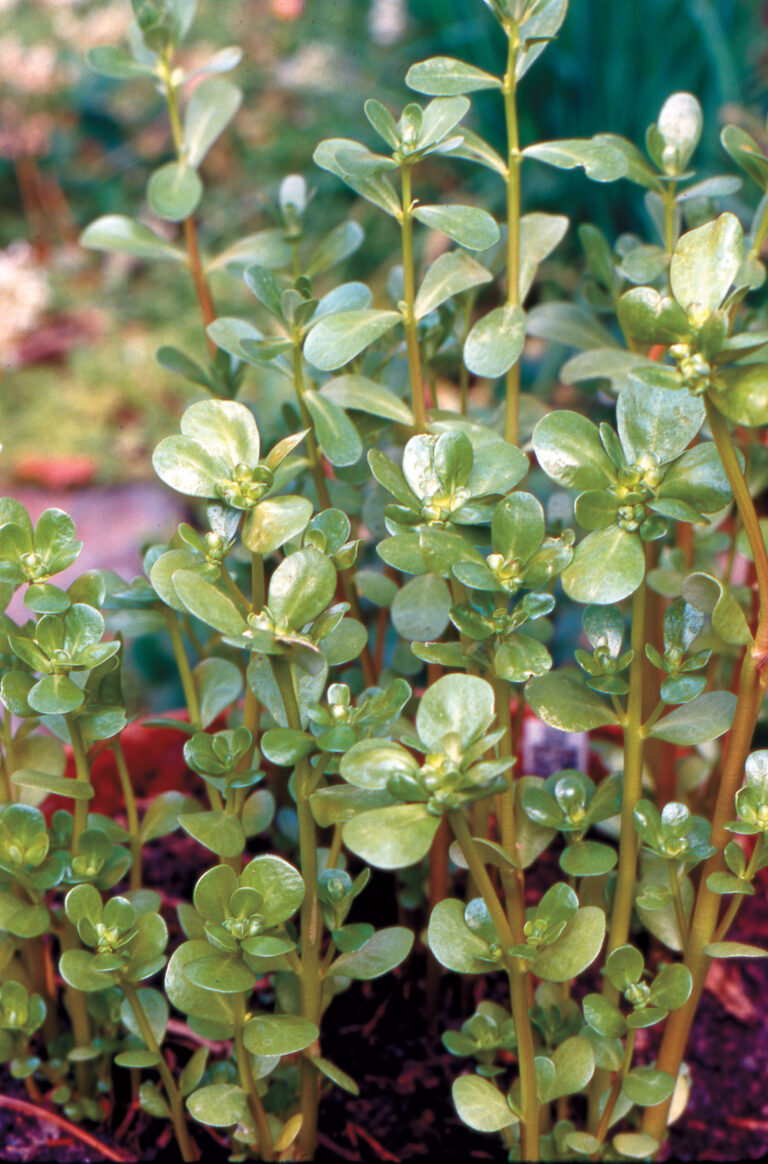
Purslane is an annual that thrives in rich soil and prefers recently turned soils. Its leaves are smooth, thick and paddle-shaped. Depending on the variety, the leaves may grow from one-half to 2 inches long. Wild purslane grows horizontally and forms flat, circular mats up to 16 inches across. Its round, thick stems radiate from the plant’s center and are often reddish at the base. About mid-July, purslane develops tiny, yellow flowers about a quarter of an inch across that usually open only in full sunlight.
Wild and Cultivated Best Sources of Omega-3 Linolenic Acid
(Grams* per 100-gram serving or approximately a half cup.)