“What though youth gave love and roses,/ Age still leaves us friends and wine.” — Thomas Moore, 1815
In the Midwest, we are proud to be hailed as “the bread basket” of the nation and produce a multitude of crops. However, grapes and wine production are not generally synonymous with this area. Nevertheless, vineyards and wineries have produced in the area for more than a century. Some grow their own grapes and many import the grapes from an environment that is more conducive for producing the best grapes for wine production.
If you enjoy wine, pursuing the hobby of making wine yourself reaps many rewards and also expands your appreciation for what goes into the making of a good wine. As with many hobbies, it is not just the end result, but the process itself, that provides an intriguing experience.
Another distinct advantage of producing your own wine, is having complete control over what goes into your wine. Some commercial wine producers add other ingredients to their wine, besides grapes and sugar, to enhance flavor and sometimes increase shelf life. Sulfites are an added ingredient that some people are allergic to and can easily be omitted from your own wine. Sulfites act as a preservative, so when omitted from the wine, an opened bottle needs to be consumed within a few days.
Speak the Language: Commonly Used Terms in the Winemaking Process
- Racking – term used to describe transferring juice/wine from one container to another. Used primarily to take out sediment and also to introduce oxygen for part of the fermentation process.
- Fermentation — process by which active yeast changes sugar into alcohol.
- Cap — during red-wine fermentation, the skins float to the top forming a cap. This cap needs to be stirred back into the fermenting wine.
- Punch down the Chapeaux — (or Cap) the process of resubmerging the cap back into the fermenting wine.
- Carboy — large glass bottle (usually 3 to 5 gallons) that can be used to ferment wines in.
- Lees — Sediment that forms and settles to the bottom of the Carboy.
- Tannins — Naturally occurring compounds found in grapes that can contribute to an astringent/bitter taste in the wine.
Winemaking in the Midwest
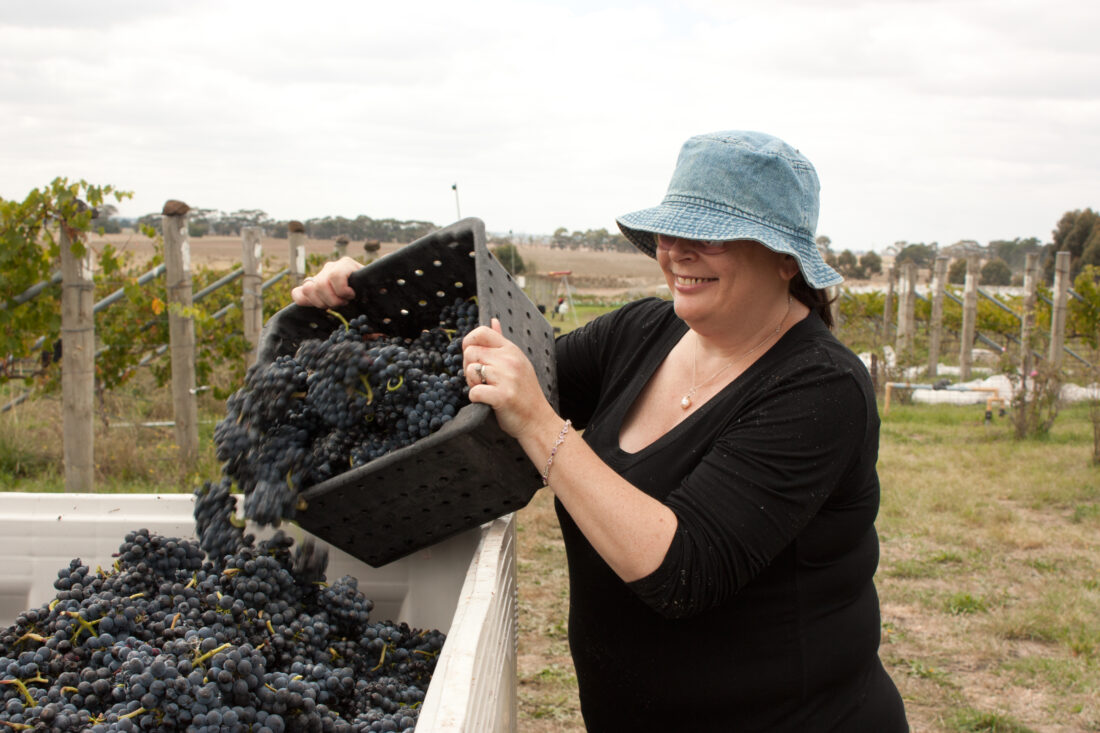
All 11 states in the Midwest have at least some degree of wine production, and the figures don’t even include home wine production by hobbyists. According to the Midwest Wine Press, Michigan is the leading Midwestern state for wine production with 2,650 acres dedicated to grape growing. The Midwest Wine Press is “the first business publication dedicated entirely to the art and business of winemaking in the Midwestern United States.”
Dave and Joan, a couple who reside in Mundelein, Illinois, have produced several vintage years of wine. They first became interested in the process through some mutual friends and now pursue the hobby. They explain that even though we are not in the heart of wine country, there are many wine enthusiasts in the Chicago area and also several sources to buy both equipment and fresh grapes.
Generally, the grapes shipped into this area are from the Lodi region of California. Dave and Joan produce a blend of Merlot and Muscat. The Muscat grape is very juicy, easier to work with, and more predictable for producing a good wine. The white wines are, in many ways, harder to produce for the beginning vintner, considered to be more fragile. Grapes for red wines are more “predictable” and easier to work with.
Before pursuing the hobby of winemaking, it’s good to have an overview of the craft itself and also determine if your area of the country is an area where grapes, and sometimes other types of fruit, can be successfully grown and utilized for wine production. Or, in the case you cannot grow the fruit yourself, where you can procure grapes.
Some vintners do a combination of both. While touring a vineyard in Illinois, near Starved Rock State Park, I learned that a portion of their grapes are purchased from another vineyard and only some produced locally. So depending on your needs, you can do a little of both.
Midwest Winemaking: Process and Tips
There is something to be said about the satisfaction of doing something yourself-and that also holds true with making wine. No matter where you live, how much or how little wine you intend on making, or what type of wine you choose to make-there are several steps that need to be followed if you wish to make a “drinkable”, enjoyable wine.
The actual process of making the wine takes place over several months time, but these are the basic steps that must be followed.
- Purchase, or grow, the grapes that will be used. In the Midwest, Michigan is the state most conducive to successfully growing grapes. However, if you live an area that is not so great for grape growing, then there are numerous companies that you can purchase grapes from. Generally, they are shipped in from California. Making the determination what type of grapes to grow, or if they will grow in your own backyard, is quite a task itself. Any questions about your local soil and suitability could probably best be answered by a Horticulture hotline, of sorts. For example, in Illinois, we can call the University of Illinois Extension Service, “Master Gardener” Program. Programs such as this can usually be found through the horticulture department of your local college or state university.
- Grapes must be brought to room temperature.
- Clean and sanitize all equipment.
- Leaving stems on (for addition of Tannic-natural preservative), put grapes into barrel for fermentation. Sometimes grapes will be de-stemmed depending on the type of grape, ripeness and wine style.
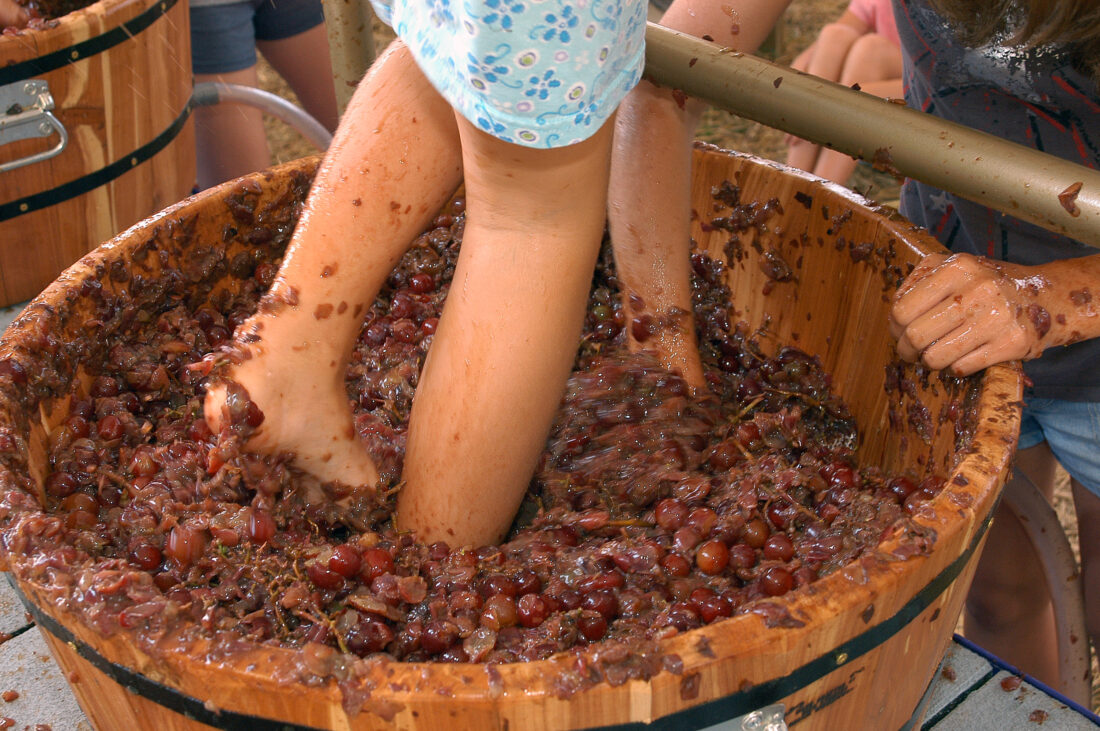
- Crush grapes. The romanticized version of stomping the grapes with your bare feet in a large oak tub may sound fun and steeped in tradition, but not a very effective process. A wine press is used to extract juice from the crushed grapes. There are a number of different styles of presses used, but they all serve the same purpose. It is important to crush the grapes without crushing seeds and stems, which would add additional tannins to the wine and thereby change the flavor.
- Add sugar and warm water. Sounds simple & yes it is. Some wine makers add yeast at this point, but the natural bacteria on the grapes provide a method of fermentation without adding yeast. Some wine has added sulfites, also. This is also a personal preference and wine can be made without either yeast or sulfites.
- Stir and begin fermentation process. (can take anywhere from 10 to 21 days depending on temperatures and conditions)
- “Punch down the Chapeaux”-skins and stems rise to the top, must be stirred back into the liquid. Any undesirable bacteria will subsequently be killed by being stirred into the alcohol.
- “Racking”-transferring product to glass container: Carboy. This needs to be done about twice to help remove the sediment from the wine.
- Siphon into bottle, cork and age in bottle for a minimum of 6 months for Reds and somewhat less for Whites.
There you have it, 10 easy steps for producing wine. Anyone who has made wine will tell you there is no guarantee that your wine will come out delightful and wonderful each and every time. There are many variables and it is not an exact science. That is why it is considered an art. When it is crafted to perfection and it comes out the way you want it to, then it is oh so right.

All MOTHER EARTH NEWS community bloggers have agreed to follow our Blogging Best Practices, and they are responsible for the accuracy of their posts. To learn more about the author of this post, click on the byline link at the top of the page.