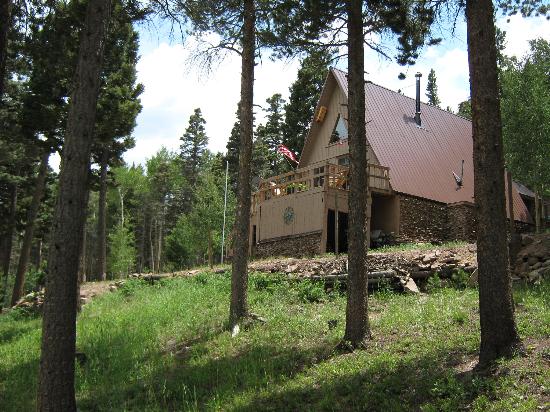
In part one of this topic I mentioned that we live in a community in the mountains of southern Colorado. Our community is 15 miles long and half a dozen miles wide with one way in and one way out. Should a wildfire occur between us and our escape route we would have to remain and try to protect ourselves. We are surrounded by the San Isabel National Forest on one side and a large tract of land that is privately owned on the other side. Very little wildfire mitigation has been done outside our community borders. Our community is known as a landowner association and therefore has a board, officers and various committees that run the association. Living in a mountainous area which is heavily wooded makes wildfire one of our chief concerns. I suspect our community is similar to many other areas that are governed by homeowner associations, and our problems are not much different than they experience.
Our community has accomplished some wildfire mitigation over the past few years. Since the U.S. Forest Service is not going to properly mitigate many square miles of the forest that abuts our properties we can only do what we can within our own lots and the common land we all share. The association is making some very smart decisions as well as some that perhaps have not been thoroughly thought out or fully completed
They have established dry hydrants where they can pump water from lakes and streams to a water truck that has been recently purchased. They also purchased a wood chipper that will mulch limbs and small trees, therefore reducing the fuel source. These are very good decisions and will be useful to preventing and fighting a wildfire. There presently are no trained personnel to man the truck or contingency personnel to support the existing equipment. We have summer residents and a small contingent of full time residents like myself. The shortcoming of this program is that older folks like myself are neither trained nor physically able to fight 200 foot flames closing in on you. There is talk of training some people; however to slow or stop a wildfire takes able qualified men who can work together and not be distracted by protecting their own homes or property. The plan is a good plan but lacks completeness.
Our community has an alternative escape route through the National Forest. Many visit our community in large motor homes that would get stuck on the four wheel drive alternative road. The road is one lane wide and other vehicles behind a stalled or blocked vehicle would be stuck in the open with no safe place to go. Any plan should be fully complete and include as many of the members of the community as can be engaged. There is a gate across the alternative road and no one knows who has the key to the gate; any delay there could be fatal. Having a plan that is not complete or sufficiently detailed can be an invitation to disaster. Sometimes no plan may be better than a faulty plan that puts people in danger. Those who live in an HOA or similar association should engage all the members of the community and develop a plan formulated with as many opinions as possible and not take it upon the shoulders of a few to devise a plan based upon limited input.
It is a good idea is to have a wood fest that eliminates wildfire fuel from the community and provides firewood for those who need it. Having those come into a community and remove fuel is a valuable benefit to the entire community. Our community is a gated community and the implementation of a wood fest seems to be a good idea. Having volunteers personally escort woodcutters into the community, staying with them, then escorting them out seems a waste of volunteer manpower. By providing wood cutters a map to a specified area, having signs along the way to keep them on route,, having a volunteer present at the cutting location to monitor cutting seems to make better sense. That way those wishing to cut firewood could be directed to seperate locations and fewer volunteers, and more firewood could be cut. Charging for the firewood per load also makes little sense as it is the community that benefits mostly from the removal of the firewood and further limits cutting to those who can afford to pay for the privilege of cutting. A very good idea and faulty implementation.
One of the excellent ideas our community has put into place is having a location for members to dump brush when they clear their lots. It is then burned in the winter when there is adequate snow on the ground. Having areas for members to dump brush also encourages people to reduce fuel on private lots and acts to slow down a wildfire or try to stop it. Educating members on clearing their lots and being responsible wood lot owners is also a good idea that can expedite lot clearing.
Wildfire mitigation is important and necessary for survival but it needs to be carried out in a well thought out and proper manner and carried to completion. Associations need to invite and involve members in such procedures. Wildfire safety effects everyone and everyone should be involved in formulating a good plan. Plans are more complete when as many members as possible are able to contribute ideas and suggestions.
Our association bases many of its decisions on a local forester. Not all foresters are right all the time and additional input should be sought. For example a forester told us years ago that spruce bud worm had no natural enemies and we would have to spray toxic herbicides to eliminate the infestation. A residual of the spray is that it also kill birds. I have observed over the years how devastating the bird population has been on the spruce bud worm. Diverse opinions are worth more than one single opinion.
If you live in an HOA or similar association I encourage you to get as many opinions as possible and formulate complete and workable plans. Sometimes HOA’s don’t welcome diverse opinions, but they should if they want the best plan possible. Personal feelings and egos need to be set aside and all members of a community need to work together on certain projects like wildfire mitigation Some people are not comfortable in a group setting or speaking in public. If the HOA leadership has to go door to door for ideas and suggestions they should do so. Protecting yourself and your community should be a community effort that everyone will benefit from.
Our association has made many very good moves toward wildfire mitigation. I therefore believe we can all learn from each other if we just make the effort to engage all members of a community. Some ideas will be good ones and others maybe not so good but all contain value if a person pays close attention. None of this has been written to diminish the good works that our community or any other community has put in place. Sometimes if we fail to all work together, fractured and incomplete plans are put into place that could have been improved if more opinions were sought. I hope my observations will help others to formulate that perfect wildfire mitigation plan and when your do, please share it with the rest of us. The plans for our community is still a work in progress and hopefully it will reach completion prior to a wildfire.
For more on Bruce and Carol McElmurray and mountain living go to http://www.brucecarolcabin.blogspot.com