
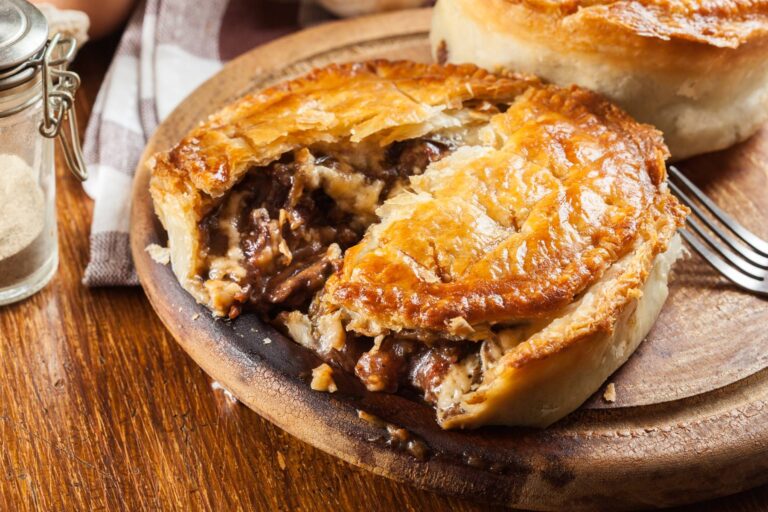
Celebrate this Groundhog Day by learning how to cook groundhog. Get a delicious pie and groundhog stew recipe to keep cozy this winter.
Come February 2, while the wind outside blows cold and sends swirls of snow skittering across the frozen Massachusetts landscape, my family, friends, and I will be basking in the sheer anticipation of warm spring breezes … and merrily celebrating a grand holiday with song, good cheer, and a sumptuous feast.
“February 2! Why, there’s nothing special about that date … it’s only Groundhog Day,” you may say.
Yes, that’s exactly what it is. But what to many folks marks just another wintry 24 hours, or–at the most–a peek at Pennsylvania’s famed Punxsutawney Phil on the evening news, is to me and mine a festive occasion. As Pete Seeger’s recording of the old Appalachian folk tune “Groundhog” sets the mood, we honor the day-a portent of spring-and the messenger who heralds it by having Old Mister Woodchuck himself to dinner … usually in the form of a delicious meat pie and other groundhog recipes. This observance has become as traditional to us as having turkey on Thanksgiving and roast goose on Christmas.
In fact, we begin preparing for the day’s festivities months in advance. We have to, since otherwise the guest of honor would be in hibernation during the five months preceding the Great Day, and–like as not–would sleep right through the party!
A Late Sleeper
As nearly everyone knows, popular tradition holds that the wily groundhog emerges from its burrow on February 2. In my neck of the woods (coastal Massachusetts), however, Mother Nature generally tells a different story. Chucks usually appear in late March or early April (the very earliest I’ve seen them up and about was one especially mild week at the end of February). The males come out first, and they have spring lovemaking–not the weather or shadows–on their minds. Kits, in litters of four or five, are born during April and May.
Although naturalists and outdoor photographers tend to look fondly upon the forager, most growers use every means at their disposal, from fence to force, to keep the mammalian “nuisance” off their premises. A few individuals, however — including myself — maintain a third perspective on Marmota monax: We cherish this specimen of our native fauna as a gastronomic treat.
Now I realize that many people get the queasies at the thought of sitting down to a plateful of woodchuck stew. But the simple fact is, groundhogs are eminently edible and delicious. Like rabbits and squirrels (both of which are valued food animals), whistle-pigs are vegetarians. Thus, their meat, when properly prepared, is quite tasty and tender.
Hunting Groundhog
Perhaps because they’re so widely considered a “pest” animal, woodchucks are fair game throughout the year in most parts of the U.S. Some states do have specific seasons and/or other regulations that apply to hunting the varmints, however, so be sure to check with your fish and game department or local warden before you go afield. And in any case, keep in mind that the little chucklings are totally dependent on their mother for at least six weeks. For that reason, I make it a practice (and I hope you will, too) of waiting until mid- to late summer–after the young have left the natal den and are able to fend for themselves–before hunting the critters.
Groundhogs are fairly easy to trap: Green beans and cut apples are both favored baits that produce good results. I’ve also successfully used ripe bananas to live-trap groundhogs during late summer.
A somewhat tougher challenge faces the sharpshooting hunter, who must sneak up on the keen-eyed, sharp-eared quarry. Small-caliber rifles (for instance, a .22 rim-fire loaded with high-speed hollow-point bullets) or any of the more modern flat-trajectory “varmint” calibers–such as a .222 magnum, .22-250, or .225–are suitable for taking groundhogs. The best times for stalking monax are during the animal’s usual feeding periods of early morning and just before sunset, but chucks can also be found sunning themselves at the entrances to their burrows (they seldom roam far from their homes) during almost any daylight hour when the weather’s warm and sunny.
While hunting in local hay- and cornfields, often in temperatures of 90°F or more, I keep a large picnic-style cooler in the bed of my pickup. Immediately upon bagging a chuck, I gut it and place it in the iced box. You wouldn’t want to eat a T-bone steak that had been left in a hot hayfield for an hour, and exposed wild game doesn’t fare any better. So remember . . . get that meal-to-be on ice right away!
As soon as I get back home, I skin and cut up the chucks into usable pieces, carefully removing any fat and glands.
Groundhog Scent Glands
[EDITOR’S NOTE: Woodchucks, as well as most other small food animals such as rabbit, raccoon, and opossum, have groundhog scent glands that should be excised as soon as possible to avoid tainting the meat. When gutting or dressing groundhogs, look for-and cautiously extract intact-these small gray or reddish brown kernels of fat located under the forelegs, on top of the shoulder blades, along the spine in the small of the back, and around the anus.] I then wrap and freeze whatever meat we won’t consume within the next few days. Chucks taken in August and September and frozen immediately will keep long enough for our annual festivities on February 2. (Incidentally, if I’ve bagged any old, gristly ‘hogs, I reserve them to be used as bait for winter fox-trapping. And since the hide on woodchucks is exceedingly tough, some people also scrape and tan the skin to make a useful, durable leather.)
Groundhog Recipes
You can use woodchuck meat in virtually any recipe calling for small game and in many other dishes as well. My favorites, though, are pie (our traditional Groundhog Day fare) and stew. Here are the directions for making both.

Woodchuck Pie Recipe
- 1 woodchuck
- 3 medium carrots
- 3 potatoes
- 1/4 cup of butter or margarine
- 1 onion, diced
- 2 tablespoons of flour and piecrust dough
Directions:
- Quarter the woodchuck and place the pieces in a large pot with enough cold water to cover the meat.
- Boil it for 10 minutes, then discard the water, refill the pan, and bring the liquid to a boil again.
- Lower the heat and let the contents simmer for about 1 to 1-1/2 hours.
- Add the carrots and potatoes and continue cooking the stew for about another 30 minutes … until the meat is tender and separates easily from the bone. By this time, you should be able to pierce the vegetables readily with a fork.
- Now, strain the liquid and reserve 2 cups. The remaining pot liquor can be saved for soup stock, or discarded.
- Next, remove the cooked meat from the bones and cut it into bite-sized pieces. Melt the butter or margarine in a large, heavy skillet, add the diced onion, and cook it for 5 minutes. Then add the flour and stir the mixture until it bubbles … put in the reserved liquid and blend the brew some more until it thickens . . . and, when that happens, combine the vegetables and meat, mixing the whole concoction thoroughly.
- Finally, butter a large casserole and pour in the meat-and-vegetable mixture. Lay piecrust dough over the top of the filling, brush the pastry with milk, and place the container in a preheated 400°F oven for about 30 minutes, or until the crust has turned golden brown.
Groundhog Stew Recipe
- Prepare the meat and vegetables in the same way prescribed for woodchuck pie, but strain and reserve all the liquid — instead of just 2 cups — and put it into a clean pot.
- Then remove the meat from the bones and cut it, as well as the potatoes and carrots, into bite-sized pieces.
- Add the chunks to the pot liquor and bring the stew to a full boil. That’s it! If you like, you can also add dumpling batter to the broth in spoonfuls, cover the pot tightly, and cook the tasty meal for an additional 12 minutes.
Try either recipe yourself, and you’ll find out why February 2 holds a fond place in my family’s hearts … and stomachs!







