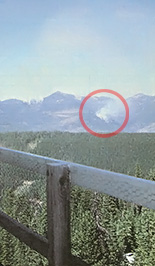
Feeling a slight sense of apprehension, I took my first
look at what was to be home for my husband and me over the
course of the three months to come: a 12′ X 12′
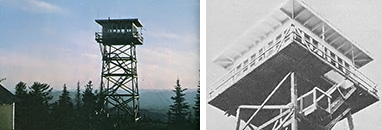
glass-enclosed room perched on top a 40-foot tower on
northern Idaho’s Gisborne Mountain. Mike and I were about
to begin a season as fire lookouts for the U.S. Forest
Service, and I was still a bit leery of the rustic
life we would lead in our crow’s-nest.
The lookout tower was at the end of a chunky, rutted road
some 30 miles from a store, ten miles from our nearest
neighbor, and two miles from any source of water. We had no
electricity, and only a small government radio for
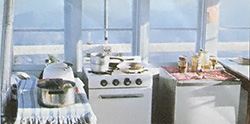
communication. The furnishings in our mountaintop aerie
included a bed, a table and two chairs, a tiny stove, a
midget refrigerator … and the tool of our “trade”: the
four-foot-tall fire-finder we used to search for plumes of
smoke.
Besides spotting possible blazes, our other responsibility
was to report daily weather data to the regional Forest
Service station. So, as you can imagine, we looked
forward to having a lot of spare time to enjoy our
magnificent 360° view of mountains, lakes, and sky.
Water Conservation
Soon after settling into the lofty home, we realized that
water would be our most precious resource. Because the
nearest spring was a round-trip hike of four miles, we had
to devise ways to conserve the supply (a Forest Service
truck made periodic — if irregular — visits to
fill up our two 10-gallon tanks).
The biggest water wasters in most urban homes, of course,
are the various components of the indoor plumbing system.
Since we had an outhouse — and no piped-in
water — we didn’t even have to concern ourselves with
that kind of extravagance. Mike and I found, however, that
we were able to save still more of the valuable liquid by
practicing our own unorthodox (but efficient! )
conservation methods.
Our baths were usually shared, short (nobody lingers when
bathing on a windy catwalk in 40°F weather!) … and
limited to one every two or three days. We washed our
clothes — once a week — in the rainwater
collected in a two-gallon bucket. Furthermore, Mike and I
found that — if we steamed our vegetables — the
same water could be reused for several meals. We also made
it a habit to eat together, out of the same pot or pan, so
that we’d have fewer dishes to do. Then all our eating and
cooking utensils for the day were washed after dinner …
and one evening’s rinse water was saved to serve as the
next day’s wash water.
In spite of such Spartan methods, we were actually quite
comfortable … and a bit proud of the fact that
our water consumption was less than 2% of that of many
American couples (we went through 15-20 gallons a week, as
compared to an average-use figure of 200 gallons a day!).
We were surprised — and pleased — to know that
so little could do so much!
Cooking and Foraging
We also learned how to stretch our stockpile of food.
Storage space was at a premium inside our cramped quarters
… so Mike and I quickly found ways to trim our food
supply while maintaining a varied diet. (An added benefit
of such frugality was the low cost of our simple
meals … in fact — at summer’s end — we
estimated that the two of us had spent a total of $75 for
food during our entire stay in Idaho!
The tower was equipped with only a small single-burner
propane cooker, so our dinners usually consisted of
one-skillet dishes, such as a vegetable and rice mixture.
One of our favorite staples was dried lentils: They’re
inexpensive, easy to store, and nutritious. We often ate
the legumes as a cooked vegetable, and also sprouted them
for use in salads.
Our healthful, low-budget diet was supplemented by the
amazing array of wild foods growing on our Idaho mountain … including thimbleberries, raspberries, serviceberries,
wild ginger, mint, dandelions, cattails, goldenrod, and
fireweed. On sunny days, the catwalk outside our tower room
was crowded with boxes of our foraged harvest … all of
it “baking” into wild teas and dried fruits. Our best
discovery, however, was the patch of huckleberries that
sprang up right at the foot of the tower. The private hoard
provided us, for weeks , with the basis for
delicious pie, syrup, cake, relish, jelly, and jam.
Energy Consumption
Since no electricity ran to the tower, our energy usage was
minimal. We got along very nicely without many of the
“standard” appliances found in most American homes …
and even managed to reduce our use of the tower’s propane
heater and lamp. After all, our glass-enclosed home
received brilliant sunshine — on all sides —
from 5 a.m. until 9 p.m. every day, so we hardly felt the
need for artificial heat or light.
My energy-economical husband — who was eager to make
use of that sun-provided heat — designed and
constructed a simple solar shower, which we used out on the
lower level of the catwalk. The device consisted of a small
black metal plate collector (positioned just below the
southern windows) and a five-gallon collapsible plastic
water container mounted on the catwalk railing. When the
liquid in the latter unit was allowed to drip through a
hose and into the copper tubing of the collector, it was
warmed by the sun … and then flowed through a second
hose into another storage unit (really just an old
styrofoam ice chest) which hung under the catwalk just
above the top landing. Mike attached a faucet and shower
head to the last container … so whenever we wanted a
quick solar shower, it was ready and waiting for us!
Long after we finished our service as Forest Service fire
lookouts, the spirit of the simple lifestyle on Gisborne
Mountain remained with us. By doing without most of the
creature comforts of modern civilization, we had become
more attuned to the natural world and had learned to
recognize the efficiency of nature in its untouched state.
Even though we returned to our permanent home and winter
jobs, our tower experience left us with a new understanding
of self-sufficiency that we’ve since tried to apply to
every aspect of our daily lives.