
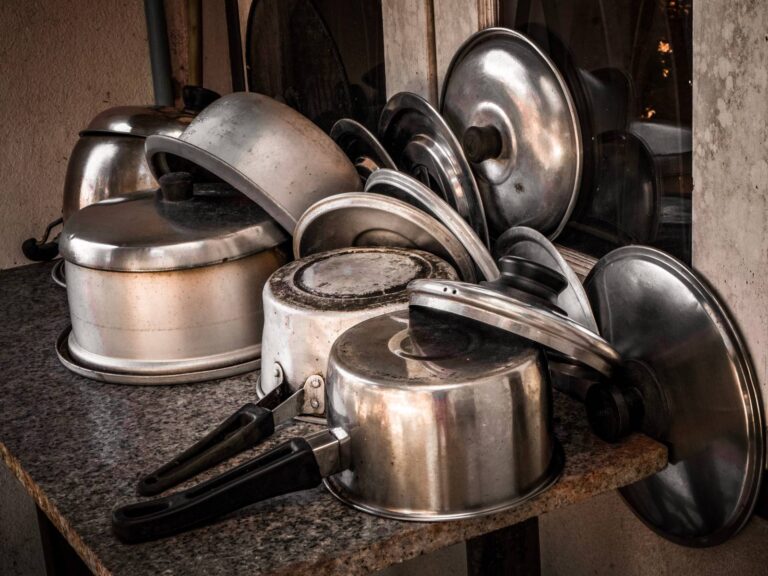
We have a bunch of tomatoes that we plan to cook into sauce. We have an enamel stockpot, but the bottom isn’t perfectly flat, so we can’t use it on our glass-top stove. We have another stockpot, but I’m not sure if it’s aluminum or stainless steel — but it does have a flat bottom. The outside is shiny; the inside looks more like a stainless steel sink. It has a thick/heavy bottom. I couldn’t find a definitive way to tell if the pot is aluminum or stainless — do you know of one? It doesn’t have any numbers or words stamped on it. And if I did cook tomatoes in it (and it’s aluminum), would the sauce be toxic or just taste bad?
How to Tell the Difference Between Stainless Steel and Aluminum
But now to your question about how to tell the difference … Here a few helpful indicators (all of which would be even more helpful if you happen to have a known aluminum or stainless steel pan around for comparison):
- Aluminum sounds duller and has less of a ring than stainless steel. Rap your knuckles on the edge of the pot or bang it with a wooden spoon.
- Aluminum feels slightly warmer than stainless steel at room temperature.
- After being washed, aluminum tends to dull slightly, while stainless steel usually stays bright.
- Because aluminum is softer than stainless steel, a key will scratch aluminum much more readily than stainless steel.
- If a magnet sticks to the side of the pot (even weakly), it is definitely stainless steel and not aluminum. (Note: If a magnet does not stick, you still can’t tell which metal it is, but you can be sure it’s stainless steel if the magnet does stick!)
If you’re a science nerd and like to do silly kitchen experiments, you might try this wacky method of determining the difference. But beware that your weight measurements could be totally thrown off if the pan has plastic handles or a copper insert in the bottom, etc.
You might also try taking the pan to your closest kitchen store or cooking school to ask someone more familiar with different kinds of cookware; They probably can spot it right away. Good luck!
Aluminum Reactivity and Tomatoes
You don’t want to use aluminum (or copper) pots, pans or even utensils when cooking tomatoes. Aluminum is a reactive metal, so will react with the acid in tomatoes resulting in bitter flavors and duller colors for the tomatoes, and possibly damages and discoloration for your cookware.
Aluminum is a good choice for some types of cooking, because it is inexpensive, easy to clean, lightweight and highly conductive (second only to copper). Plus, it’s sourced from a fairly abundant material. But it’s just no good for cooking acidic foods (wine, citrus, tomatoes, chili, barbecue sauce, chutney, etc.). It’s also rubbish for cheese making, home brewing, and other kitchen adventures in which you are deliberately trying to control a reaction and just don’t want any uninvited guests at your party.
As for the health concerns, the research is inconclusive on whether aluminum particles that enter our bodies via cookware are particularly toxic. However, there’s no doubt that acidic compounds do break down aluminum. I definitely wouldn’t want any random bits of cookware or errant unwanted compounds in my marinara. And of course, I don’t want my marinara to taste bitter or look dull, so steering clear of aluminum is a good idea all-around.
Stainless steel is a good choice because it is chemically inert, but it is more expensive and is a poorer conductor of heat than aluminum. To compensate for this drawback, cookware manufacturers often coat the underside of stainless steel pans with copper, or insert a layer of copper or aluminum just beneath the stainless steel surface. According to food science expert Harold McGee, these “hybrid pans are the closest thing we have to the ideal chemically inert but thermally responsive pan.”
Note: To see an excellent review of cookware sets, ranging in price from affordable to astronomical, see Cook’s Illustrated. The Cook’s Illustrated website requires a paid subscription, and it is well worth the $25 annual fee if you cook regularly. But if you can’t access the article, I’ll help you out with this shortcut: The Tramontina 18/10 Stainless Steel TriPly-Clad line is apparently the best quality you can get at an affordable price. I have a few Tramontina pans myself, and I love love love them.






