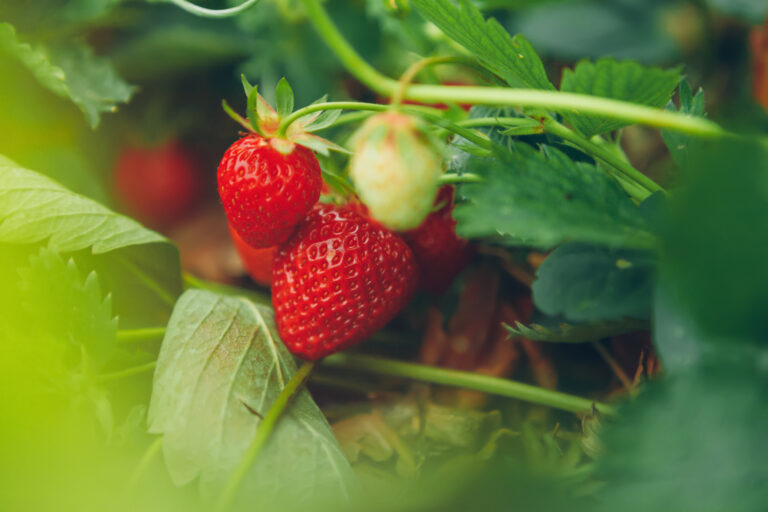
Make your dream of growing strawberries a reality with this guide on how strawberries grow, when to plant, the different types of strawberries, and more. Learn how to grow strawberries today!
The first fruits of the summer, homegrown strawberries are a thousand times tastier than the hard, flavorless supermarket options. Strawberries are cold-hardy and adaptable, making them one of the easiest berries to grow. Growing strawberries in containers is a quick small-space solution, and they thrive in raised beds.
When to Plant Strawberries
Growing strawberries requires sun and acidic soil with a pH between 5.5 and 6.5. Plant strawberries as early as six weeks before your last frost. Use row covers to protect new plantings from extreme cold and wind. You can also set out plants in fall, which is a common practice where winters are mild.
How to Plant Strawberries
Choose a sunny, fertile site free of perennial weeds. A strawberry patch will produce well for 3 to 4 years, so enrich the site with plenty of organic matter. Raised beds or planters are ideal for most types of strawberries, plus they make the berries easier to pick.
A few varieties can be grown from seed, but most gardeners save 1 to 2 years’ growing time by setting out individual container-grown plants or dormant bare-root plants sold in bunches. Transplant individual plants to the same depth they grew in their containers. Spread out bundled plants and trim off any dead leaves and roots. Find the central crown, and transplant so the base of the crown rests at the soil line and the roots are spread out. Mulch between all strawberry plants with pine needles, chopped leaves or another mulch that supports acidic soil conditions.
Space requirements vary by strawberry type and variety. Those that produce a lot of vigorous runners should be planted 18 inches apart (they will fill in most of the vacant space by late summer). Plant alpine strawberries that do not produce runners — such as ‘Mignonette’ — 12 inches apart in beds or 8 inches apart in containers.
How to Grow Strawberries
Following spring planting, pick off flowers that form on June-bearing varieties their first season. With ever-bearing varieties (especially alpines), pinching off the first flowers can lead to better production of later-ripening, more intensely flavored fruits. With vigorous varieties, pinch off about half of the runners to help the mother plants concentrate on the following year’s crop.
If you don’t need more plants, removing all runners from ever-bearing varieties will increase the production of big, juicy berries.
Renovate beds of June-bearing strawberries in summer, after the fruiting season has ended. Pull weeds, and thin plants to 6 inches apart. Mow or cut back old leaves 4 inches from the ground and distribute a light application of a balanced organic fertilizer between the plants. Top the renovated bed with a half-inch of weed-free compost or fertile garden soil. Handled this way, a planting of 25 June-bearing strawberry plants grown in a 30-square-foot bed will produce about 25 quarts (close to 30 pounds) of strawberries annually for 3 to 4 years.
Most strawberries produce runners, which can be trained to take root in promising places. Lift and move wanderers in late summer or first thing in spring. Varieties that do not produce runners can be divided and replanted, preferably in early spring.
Pest and Disease Prevention Tips
Slugs and snails chew round holes in fruits at night and hide in mulch during the day. Control them by handpicking, temporarily pulling back mulch, and capturing them in traps. Prevent theft from birds by covering your patch with netting as the first berries ripen.
Strawberries can be weakened by a number of leaf-spot diseases, which can be interrupted by mowing or cutting off the foliage in midsummer.
Older plantings often develop root-rot issues. Start a new bed in a fresh site every 4 to 5 years.
Strawberry Varieties to Grow
Strawberry types vary in their growth habits and fruiting times. For prolonged productivity and unique flavors, consider growing several types.
June-Bearing Strawberries
Varieties: ‘Earliglow,’ ‘Honeoye,’ ‘Jewel,’ ‘Sparkle’
June-Bearing strawberries (Fragaria x ananassa) grow in many climates while producing their crop over three weeks from late spring to early summer. The hardiest varieties survive winter temperatures to minus 30 degrees Fahrenheit. Plants produce many runners and grow as ground cover or as matted rows. Because of their earliness, high quality and concentrated fruit set, June-bearers are the best for preserving.
Ever-Bearing Strawberries
Varieties: ‘Albion,’ ‘Evie 2,’ ‘Mara Des Bois,’ ‘Seascape’
Ever-bearing strawberries (F. x ananassa) also called day-neutral strawberries, produce a heavy set of berries in early summer followed by several more lighter flushes in late summer and fall. They need cool night temperatures (below 65 degrees Fahrenheit) for good fruit set all season. These are excellent strawberries for large containers or raised beds, where you can give them attentive watering and regular feeding. They are not as hardy as June-bearers, but some varieties can survive temperatures of minus 15 degrees.
Alpine Strawberries
Varieties: ‘Alexandria,’ ‘Mignonette,’ ‘Rugen’
Alpine strawberries (F. vesca) bear dime-sized, intensely flavored berries that may be red, yellow or white, depending on the variety. Many varieties can be grown from seed, are hardy to minus 20 degrees and don’t produce runners, making them easy to manage in containers or raised beds, but do rebloom and set fruit intermittently all summer. Because of their small size, alpine strawberries are easiest to pick if grown in raised beds or roomy planters. Small fruits with big flavor, best picked ripe and eaten fresh.
Musk Strawberries
Varieties: ‘Capron,’ ‘Profumata di Tortona,’ ‘Rosea’
Musk strawberries (F. moschata) produce small fruits with a pungent aroma and intensely flavored fruits. Berries tend to be precious and few; improve fruit set by adding male plants every couple of years. The unusually tall, vigorous plants form a dense ground cover that can choke out weeds. Musk strawberries are too rowdy for containers and are hardy to at least minus 10 degrees.
Harvesting and Storage
Expect some flavor variation each season. Cool, wet springs lead to soft, watery berries, while plenty of warm sun brings about firmer, sweeter fruits.
Pick strawberries with a short stub of green stem attached. Harvest in the cool of the morning and refrigerate right away. Wait until just before eating or preserving strawberries to wash them under cool running water and remove their green caps. Preserve berries within three days for optimal flavor and color.
In the Kitchen
A generous handful of fresh strawberries will provide your daily quota of vitamin C, along with manganese and a dozen other nutrients. Good flavor pairs include almond, mint, oranges, sharp cheeses or chocolate. Strawberries marry well with rhubarb in tarts, pies and even wine. Freeze imperfect fruits and use them in smoothies or muffins and other quick breads.
You can freeze strawberries whole by placing dry berries on a cookie sheet until hard and then transferring them to a freezer-safe container. Strawberry jams or preserves can be processed in a water bath canner. (See Preserve Strawberries: Easy Recipes to Stretch Strawberry Season for some “berry” good jam recipes.) Dried strawberry slices and strawberry leather are easy to make in a dehydrator.
For details on growing many other vegetables and fruits, visit our Crop at a Glance collection page.
For help with planting dates, spacing, and other aspects of garden planning, be sure to check out our amazing online Vegetable Garden Planner.
Contributing editor Barbara Pleasant gardens in southwest Virginia, where she grows vegetables, herbs, fruits, flowers and a few lucky chickens.