Ingredients
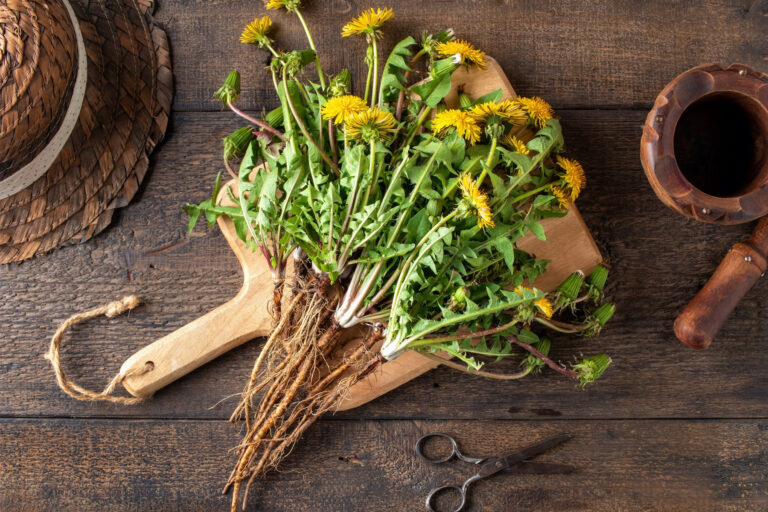
- 1 quart young dandelion plants
- 1 lemon
- 2 teaspoons finely chopped ginger
- 1 gallon cold water
- 3 cups light brown sugar
- 1 tablespoon cream of tartar
- 1 tablespoon brewer’s yeast
Directions
- Wash the plants and remove the hairy roots without breaking the main taproots.
- Squeeze the lemon and put the juice aside; peel the rind off the lemon in strips (no pith should be left).
- Put the plants into a pail with the ginger, the lemon rind, and the water. Boil for 10 minutes, then strain out the solids.
- Put the sugar and cream of tartar in the fermenting vessel and pour the liquid over them. Stir until the sugar is dissolved.
- When the liquid is lukewarm, add the yeast and the lemon juice, and leave the vessel, covered with a folded cloth, in a warm room for 5 days.
- Strain out all the sediment and bottle in screw-topped cider or beer bottles. This homemade dandelion beer is ready to drink in about a week, when it hisses as the stopper is loosened. It does not keep very long.
- Test the bottles daily to see that they don’t get too fizzy. Even after only 2 days in the bottles, the beer is smashing.
Looking for a refreshing, fizzy drink thats good for treating upset stomachs, indigestion and clearing the kidneys and bladder? Try out this dandelion beer recipe.
Unlike other books that focus on foraging, Roger Phillips gives detailed recipes and preparation instructions that are crucial to cooking and enjoying wild foods in The Wild Food Cookbook (Countryman Press, 2014). As we rediscover the deep nutritional value of wild foods, a reliable guide to deploying these healthy, natural ingredients in the kitchen will be necessary — this cookbook fills that need admirably.
Apart from being a very popular country tipple, dandelion beer was the drink most favored in the past by workers in the iron foundries and potteries of England. It is refreshing and particularly good for relieving stomach upsets or indigestion and for clearing the kidneys and bladder.

The Wild Food Cookbook, by Roger Phillips, focuses on cooking and enjoying wild foods with an appetizing and attractive selection of recipes using the many plants, mushrooms and seaweeds that are edible.