
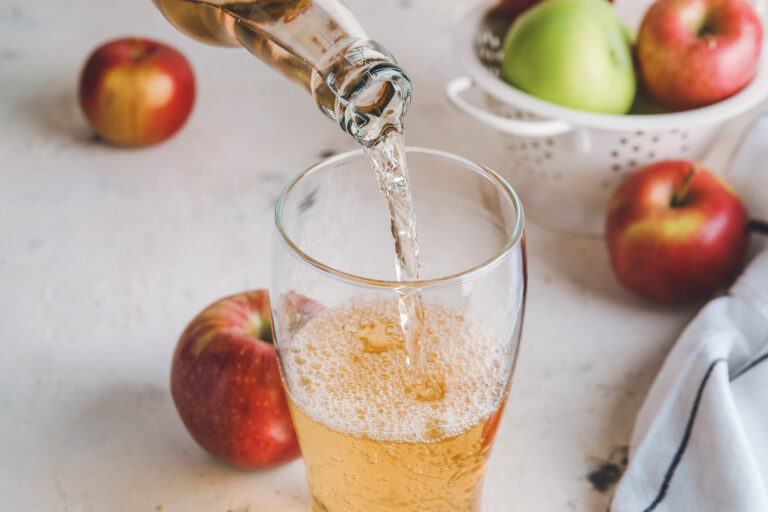
Learn how to make hard cider at home using this guide. Includes a delicious sparkling hard cider recipe for those of us who enjoy bubbles!
Hard Cider Brewing Equipment
- One 5-gallon food-grade plastic bucket with spigot, lid and airlock
- 3 to 6 feet of 5/16-inch food-grade plastic tubing
- Stainless steel or plastic spoon
- Enough half-gallon glass “growler” jugs or other bottles (including caps or corks) to store the finished cider
- Optional: Stainless steel or enameled pot
- Optional: a second 5-gallon food-grade plastic bucket with spigot, or a glass carboy
Hard Cider Ingredients
- 5 gallons of preservative-free, sweet apple cider, preferably unpasteurized
- Two packets of wine yeast (Lalvin 71B or Red Star Cote des Blancs are good choices)
- Optional for higher alcohol content: 2 pounds of brown sugar or honey
- Optional for creating a starter: one 16-ounce bottle of preservative-free, pasteurized apple juice
- Optional for sparkling cider: 3/4 cup honey or brown sugar
How to Make Hard Cider At Home
Brewing hard cider from non-alcoholic, or “sweet” cider is a simple process, and the inebriating end product is as delicious as it is discombobulating. Here are the steps you’ll follow to make hard cider of your own.
Choose Your Juice
The best hard cider is made from sweet apple cider fresh from the cider press — whether your own, or a local cider mill’s. If you’re buying sweet cider, start by checking the label to be sure the cider doesn’t contain chemical preservatives, because these will kill your yeast and your cider will not ferment. (The cider is chemically preserved if sodium benzoate or potassium sorbate are listed on the label.) Your best bet for preservative-free cider is to buy it in season from a local orchard. In a pinch, you can also make hard cider with grocery store apple juice, as long as it doesn’t have preservatives.

Also, be aware that most commercial cidermakers are required to pasteurize their cider, and the process they use will affect the flavor. Preferably, your sweet cider should be “cold pasteurized,” which kills microorganisms with ultraviolet light. The usual method of pasteurization kills microorganisms with heat, which affects the flavor of the juice. If you’re not sure which method a local cider mill uses, it doesn’t hurt to ask.
Choose Your Yeast
A variety of dry and liquid brewing yeasts will do the trick, and you can find them online or from homebrew stores. Although you can buy specialized liquid yeast packs for fermenting cider, dry wine yeasts do an excellent job and are much cheaper. (You can get a pack for less than a dollar.)
Make a Hard Cider Starter
The day before you brew your cider, make a starter. This step is optional, but it ensures that your yeast is proofed (i.e., alive) and will start fermenting your cider right away. To make a starter, open the bottle of preservative-free apple juice and pour out a few ounces. Pour the contents of one yeast packet into the bottle, reseal it and shake for a few seconds. Within five or six hours, you should see a bit of bubbling within the bottle. Once you do, release the pressure within the bottle, reseal it and put it in the refrigerator. Get it out a couple of hours before you brew.
Start Brewing Your Hard Cider
- Simmer. On brewing day, pour your cider into the brewpot and simmer it over medium heat for about 45 minutes. This will kill most of the wild yeasts and bacteria in the cider. Bolder cidermakers will forgo this step by pouring the sweet cider directly into a plastic bucket and then pitching in the yeast. If you follow this strategy, wild strains of yeast will still be in the sweet cider when it begins fermenting. This will alter the flavor of the cider. (It may or may not improve it.) If you do heat the cider, don’t let it boil! Boiling causes pectins to set, which creates a permanently hazy beverage. While simmering the cider, you can add the optional 2 pounds of brown sugar or honey. This will boost the fermentable sugar content in your cider and up the alcohol content.
- Cool and add yeast. Next, pour the cider into a sanitized fermentation bucket — an unsanitized bucket may spoil the cider. To sanitize, pour a capful of bleach into your bucket, fill it with water, let it sit for a half an hour, then dump out and rinse with cold water. (You can also buy non-bleach, no-rinse sanitizers at homebrew stores.) Let the cider cool to nearly room temperature, then add your yeast — or starter, if you chose to make one. Stir the mixture for a minute or two with a clean stainless steel or plastic spoon to aerate, then seal the lid and affix the airlock. Place the bucket in a room or closet where the temperature is 60 to 75 degrees — the closer to 60 degrees, the better. Stay within this range if you can: At lower temperatures the cider won’t ferment, while higher temperatures will speed up fermentation, but may also change the flavor.
- Let the dider ferment. Within a day or two you should see the airlock start to bubble. The gas it’s releasing is carbon dioxide, a byproduct of the fermentation process. Congratulations, your soft cider is on its way to becoming a delicious, inebriating elixir of the gods! This bubbling should subside within two weeks, signifying an end to the primary fermentation. After that, let the cider sit another week to allow the yeast to settle out.
Options For Bottling Hard Cider
There are a couple of different ways you can go at this point:
Option 1: Bottle the Cider Now
If you want to bottle the cider immediately, affix the rinsed food-grade tubing to the spigot on your fermentation bucket and pour the cider off into sanitized jugs or bottles. (Be gentle when moving the bucket full of cider. Sloshing can disturb the yeast sediment at the bottom of the bucket and cloud up your cider.) Seal the jugs or bottles. Let the bottled hard cider sit for another two weeks and then it will be ready to drink. Your cider will probably be “still” (i.e., not fizzy) unless you let it age for several months. Hard cider is more like wine than beer, and the flavor will improve as it ages.
Option 2: Let Your Cider Clarify
If you only use one fermenter, your cider will taste fine, but may not be perfectly clear because it will probably still have some suspended yeast. To reduce cloudiness, siphon your cider into a secondary fermenter (another food-grade bucket). Sanitize this bucket before filling it with cider. Once you’ve siphoned your cider into the secondary fermenter, put a sanitized lid and airlock on it and place it back in a dark and, preferably, cool location. A month should be ample time for the cider to clarify. After it’s aged for as long as you can stand, bottle it as above. This cider will most definitely be “still,” with no bubbles.
Option 3: Make Sparkling Cider
Regardless of whether you decide to bottle immediately or let it clarify in a secondary fermenter, if you want “sparkling” cider, you’ll have to add a couple steps at bottling time. First, boil 1 cup water with three-fourths cup honey or brown sugar. Pour this mixture into a sanitized bottling bucket (i.e., another fermentation bucket with a spigot at the bottom). Then, siphon your cider over from your fermentation bucket to the bottling bucket. The honey or brown sugar syrup and cider should mix together naturally, but stir slowly with a sanitized spoon if you feel it is necessary. Then, bottle as you would normally. You’ll have to let this sit a bit longer than the still cider, so the residual yeast will have time to ferment the sugar you added and carbonate the cider inside the bottle.
Drink the Hard Cider!
At this point, it’s time to start drinking your cider and thinking about brewing your next batch. With time and experience, your skills will grow and your recipes will become more complex. Soon, you’ll be making cider that delights your friends and terrifies your enemies.
Apple Cider Resources
- Homemade Apple Cider Resources
- Cider, Hard and Sweet, by Ben Watson
- Cider: Making, Using and Enjoying Sweet and Hard Cider, by Annie Proulx and Lew Nichols
- The American Cider Book, by Vrest Orton
Originally published as “Make Your Own Hard Cider” October/November 2007 MOTHER EARTH NEWS.






