Most gardeners are familiar with hybrid vegetable varieties, which have been bred to produce superior plants with desirable traits, such as uniformity, early fruiting or resistance to disease. One drawback of buying hybrid plants, though, is that in most cases you can’t save their seeds for replanting. Many gardeners turn instead to open-pollinated heirloom varieties, which produce seeds that can be saved from year to year. So the phrase “hybrid heirlooms” may sound like a contradiction in terms, but it’s the best way to describe ‘Red Lightning’ and ‘Black Pearl’ — two new tomato varieties from Burpee.
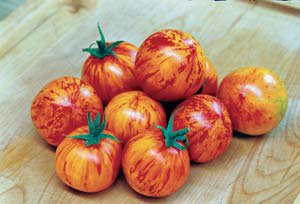
‘Red Lightning’ (see photo in Image Gallery) boasts the yellow stripes of its parent variety, ‘Red Zebra,’ and fruity-flavored ‘Black Pearl’ looks like its chocolate-tinted parent, ‘Black Cherry.’ But the major benefits of these new heirloom varieties — strong resistance to Fusarium and Verticillium wilt diseases — are worth the hybrid trade-off to gardeners who have tried to grow heirloom tomatoes, but were foiled by these widespread and persistent soilborne diseases.
Burpee’s interest in heirloom plants dates back to 1876, when founder W. Atlee Burpee collected hundreds of variety samples from his customers. The current Burpee president, George Ball Jr., is fascinated by heirlooms, too, especially those originally bred by Burpee. A few years ago, Ball located a New Jersey farmer growing a lima bean once known as ‘Burpee’s Big 6-Pole Lima’ — a remarkably large-podded variety bearing nickel-size beans that have the taste and texture of baby limas. After several seasons of quality selection at the company’s Fordhook Farm in Pennsylvania, this vigorous variety has been re-released this year as ‘Big Mama.’
Burpee horticulturalist Tracy Lee says the company will continue to select and breed superior heirloom strains, which often do not require hybridization. For example, starting with the hollow-hearted ‘Yellow Stuffer’ bell pepper, Burpee has spent five years selecting the best plants for uniformity, high yield and a more distinct shape. Renamed ‘Yellow Magic,’ this improved open-pollinated version is now offered alongside the new hybrid heirlooms.
Contributing editor Barbara Pleasant gardens in southwest Virginia, where she grows vegetables, herbs, fruits, flowers and a few lucky chickens. Contact Barbara by visiting her website or finding her on Google+.