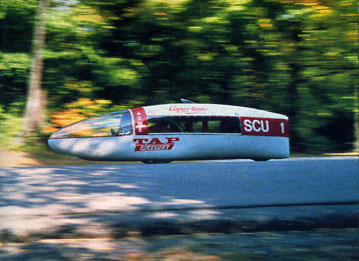
The bicycle stands as one of the best examples of appropriate technology around today. After all “A.T.” (an applied science that incorporates social and cultural values) is characterized by simplicity, universality, affordability, and reliance upon renewable resources . . . all of which are undeniable attributes of that familiar and extraordinarily efficient two-wheeled machine.
Here at MOTHER EARTH NEWS, we’ve developed several pedal-power machines and human powered vehicles of our own that put leg (and arm) energy to practical use . . . including an inexpensive recumbent tricycle that combines to good advantage a number of “trick” design features. (See Cut-Rate Recumbent Bike.)
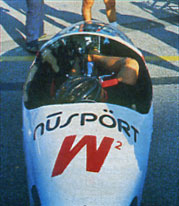
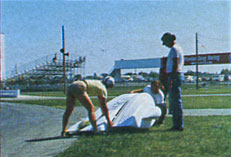
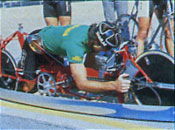
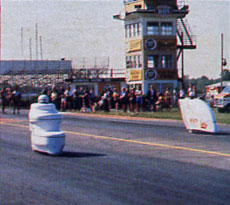
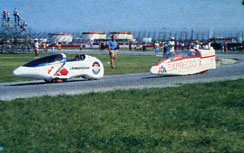
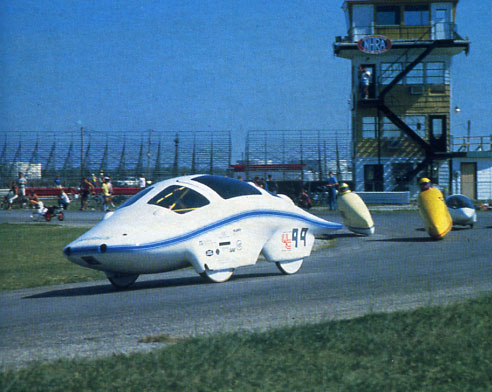
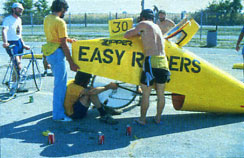
It should come as no surprise, then, that MOTHER EARTH NEWS would be interested in what’s going on at the frontier of bicycle technology . . . which is annually revealed at the International Human Powered Vehicle Association Speed Championships. Recently, the Indiana IHPVA chapter sponsored the 1983 event at Indianapolis (appropriately enough) . . . and the racing capital’s distinctive facilities, coupled with the enthusiasm of entrants and supporters alike, proved to make this ninth annual competition one of the most successful yet.
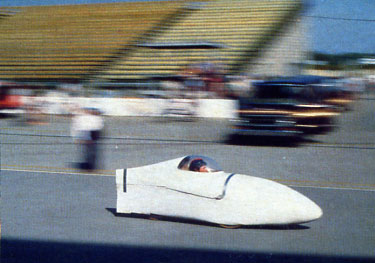
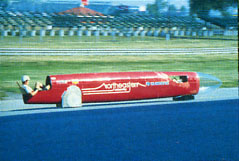
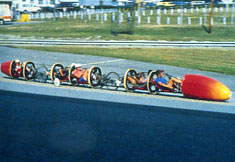
Traditionally, the championships have included several events in two categories: single- and multiple-rider vehicles. This year, though, that program was expanded to include 4000-meter velodrome pursuit races, an arm -powered-only class, and a practical-vehicle competition. The Indy 500 speedway was host to the unlimited and the 600-meter “flying start” speed trials–both clocked over a distance of 200 meters–while nearby Raceway Park was the site of the 1/4-mile sprints and the 12 1/4-and 21-mile road events. A local city park’s hilly and winding 2 1/2-mile paved course provided an ideal setting for the final 5- and 20-mile Le Mans and paced-start road races.
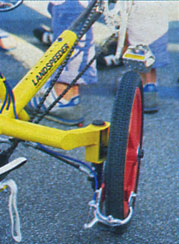
The speeds achieved throughout the competition (about 55 MPH in the sprints and in the 30’s over the road courses) were clearly impressive. Still, they tell only part of the story. The real import of the event lies in its influence on human-powered technology and that development’s effect on society. With the advent of strong, lightweight construction materials, the growing knowledge of low-speed aerodynamics, and continued advances in adapting mechanical techniques to the human body, it’s becoming evident that human-powered vehicles need not be associated exclusively with athletic individuals, but may someday be regularly used for commuting and recreation.
Of course, some of the “top of the line” vehicles you see here take advantage of state-of-the-art technology (often provided by supportive manufacturers) and represent considerable investments. On the other hand, a fair number of machines offer an intermediate approach and were designed by people leaning toward affordable, practical vehicles for the developing public market. There are also indications that next year’s IHPVA event may include an “assisted” class, which will allow the use of stored energy such as that from flywheels, accumulators, and even large rubber bands. We think any endeavors in the human-powered arena are efforts well spent. And whether the end result is a personal get-around-town conveyance or a pedal-powered compost shredder, it’ll serve as a prime example of healthful, appropriate technology.
EDITOR’S NOTE: Membership in the IHPVA is open to anyone interested.