Looking for some inexpensive large planter ideas? Here are a few easy bag gardening ideas to try out in your lawn this summer. You can get started on bag gardening in no time with this season-by-season, no-dig planting plan.
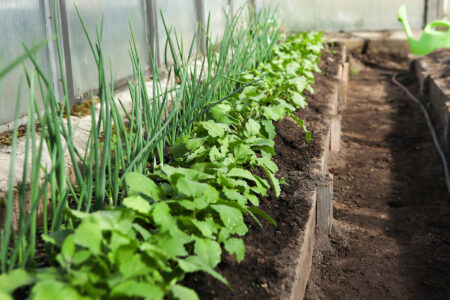
If your yard has at least a 20-by-28-foot space that gets full or almost full sun, you can grow enough vegetables to have fresh food all season with surprisingly little effort. Go ahead and dig beds if you’re lucky enough to have naturally fertile, well-drained soil, but don’t let soil flaws stop you from starting a food garden. Instead, use this quick and simple bag gardening technique. This method is almost too easy to believe, but it absolutely works! Gardening in bags of topsoil lets you get a garden going today, and offers these additional benefits:
- In the course of a season, the topsoil bags will smother the grass underneath them, so you won’t have to dig up and remove the grass sod.
- The bags eliminate aggravation from seedling-killing cutworms, which are caterpillars commonly found in soil where lawn grass has been growing.
- Bag gardens have few (if any) weeds, because bagged soils and planting mixes are pasteurized to kill weed seeds.
- You can eventually gather up the plastic bags and dig their contents into permanent beds, or just lay down a new batch of bags.
What Can I Grow?
Whether you dig right in or start with bags, you can’t go wrong with the following selection of 25 easy-to-grow crops. In addition to plenty of fresh veggies to put on the table and to store, this garden plan will also produce a year’s supply of several tasty herbs, which will attract droves of pollinators and other beneficial insects.
If you’re new to food gardening, your biggest challenge may be planting crops at the right times. A food garden should be planted in phases so that every crop gets the type of weather it prefers. The following season-by-season instructions for our easy food garden (download the plan) show how seasonal planting sequences work. You’ll also get a few labor-saving tips — such as letting pole beans twine up tall sunflowers.

Early Spring
- Prepare your site. You can dig beds in the traditional way, or you can plant most of this garden in bags. If you’re using bags, you will need about 25 40-pound bags to cover the five main beds. See Bed 3 for guidance on how to arrange the bags when starting your garden. Definitely dig the squash bed and the circular bed, mixing in a 2-inch layer of good compost as you work.
- Use a utility knife to cut out a large, rectangular window on the upper surface of each bag. Leave the sides and 2 inches of each top edge intact, resembling a picture frame. The 2-inch rim of plastic will keep the soil from spilling and help retain moisture. Lightly dust the surface of the soil inside the bags with organic fertilizer and mix it in with a trowel. (Skip this if the bag’s label says fertilizer has been added.) Stab each bag through at least a dozen times with a screwdriver or a big knife to create plenty of drainage holes in the bottom. Plant roots will use these holes to grow down into the soil below the bags.
Mid-Spring
- Plant onions, beets and early lettuce. About four weeks before your last frost, plant onion seedlings in Bed 1. (To find the average last spring frost for your location, see Know When to Plant What: Find Your Average Last Spring Frost Date.) Water well to settle the soil around the roots. Sow beet seeds half-an-inch deep and 2 inches apart. Sow some early lettuce in Bed 3.
- Plant potatoes and peas. Set potatoes 2 inches deep and 12 inches apart in Bed 2, flanked by double rows of bush snap or snow peas. These short, bushy varieties don’t need a trellis if grown closely together, although poking a few sticks into the row between the plants helps keep them off the ground.
- Plant greens and herbs. Plant lettuce, dill, cilantro and chard seeds in Bed 6. Plant chard the same way you planted beets. Set out potted perennial herbs (oregano, rosemary, sage, thyme) in Beds 3 and 6. Make a second sowing of lettuce and cilantro one week before your last frost.
- Mulch, mulch, mulch. About three weeks after your beds have been planted, thin seedlings to correct spacing (check seed packets) and hoe or pull weeds. Mulch the garden with grass clippings, hay or shredded leaves.
Late Spring
- Plant tomatoes and more. When the soil feels warm to your bare feet, set out tomatoes and peppers in Bed 5 and basil in Bed 6. Plant bush beans in Bed 3, and sow sunflowers in Bed 4. One week later, plant pole beans inside the edge of the circular bed.
- Set up the squash bed. In Bed 7, use a spade or shovel to make six or seven planting holes arranged in a zigzag pattern. Place a large shovelful of compost and a handful of organic fertilizer in each hole, then mix in thoroughly. Plant three squash seeds or one seedling in each prepared planting spot. Thin seedlings to one per planting hole.
Use a row cover to protect your squash from insect pests. To do so, push the ends of wire hoops into the ground to form three evenly spaced arches over the squash. Unfold or unroll the row cover and drape it over the arches. Secure the edges of the cover by burying them, or secure them with boards, bricks or stones. Open the cover only to weed and thin, then close it right away. One week after the first blooms appear, remove the cover entirely to allow insects to pollinate the flowers.

Mid-Summer
- Plant kale. Start kale seeds indoors or in a nursery bed, and set them out when space becomes available in Bed 3. Sow arugula. Move the row cover tunnel from the squash to your baby kale.
Late Summer
- Plant fall greens. Replace spring beets and onions in Bed 1 with mizuna, red mustard or other Asian greens, and replace potatoes and peas in Bed 2 with lettuce in front of a turnip backdrop. Replace spring lettuce and cilantro in Bed 6 with carrots.
- Plant a cover crop. After you have collected the winter squash harvest from Bed 7, you can improve the soil by growing a cover crop of bush beans, mustard, oats or peas.
Late Fall
- Plant garlic. Clean up the tomato bed, dump out the bags, and amend the soil with fresh compost and a dusting of organic fertilizer. Mix soil thoroughly with a spade or digging fork, and plant garlic cloves 4 inches deep and 4 to 6 inches apart. After planting, cover with at least 2 inches of mulch.
Choosing the Right Bags of ‘Soil’
Many garden centers sell a dizzying array of bagged soil mixes and soil amendments, so choosing one can be confusing. To make the task even more difficult, there are no strict standards that define what qualifies as “compost” or “shrub planting mix.” The best way to know what you’re getting is to look beyond the label and examine what’s inside the bag. Some garden centers set aside broken bags of topsoil so customers can examine their contents, or you can buy a sample bag to check out before you buy more.
For most soil-building purposes, a mixture that looks and feels fluffy and has plenty of tidbits of decomposed leaves or wood chips offers more organic matter than a heavier mixture that includes mostly gritty soil. Light-textured composts are usually the best choice for digging into soil as a long-lasting source of organic matter, but for the fast bag beds in this garden plan, look for products that do include some gritty soil. Plant roots prefer a mixture of soil and organic matter to organic matter alone. A bag of such soil will feel heavier than one that’s mostly organic matter, assuming both are equally wet or dry. Ordinary bagged “topsoil” or inexpensive “tree and shrub planting mix” will do quite nicely in any spot where you want to set up a new veggie bed quickly.
Considering Compost
Every garden needs a place to make compost from vegetable trimmings, weeds, and pulled plants. If you place your compost in a spot where you’re planning to add a new bed in the future, earthworms and other compost creatures will kick-start the soil improvement process. Enclosed composters made from recycled plastic work like garden garbage cans by keeping rotting debris out of sight. Most models are animal-resistant, making them a great choice for urban or suburban yards. You could also make compost in a small pen made from a circle of fencing. Both types of compost enclosures are easy to move as your garden expands.
Originally published as “Start a Quick and Easy Food Garden” in the April/May 2010 issue of MOTHER EARTH NEWS.
Adapted from Starter Vegetable Gardens: 24 No-Fail Plans for Small Organic Gardens (Storey Publishing, 2010) by Barbara Pleasant.
Contributing editor Barbara Pleasant gardens in southwest Virginia, where she grows vegetables, herbs, fruits, flowers and a few lucky chickens. Contact Barbara by visiting her website.