
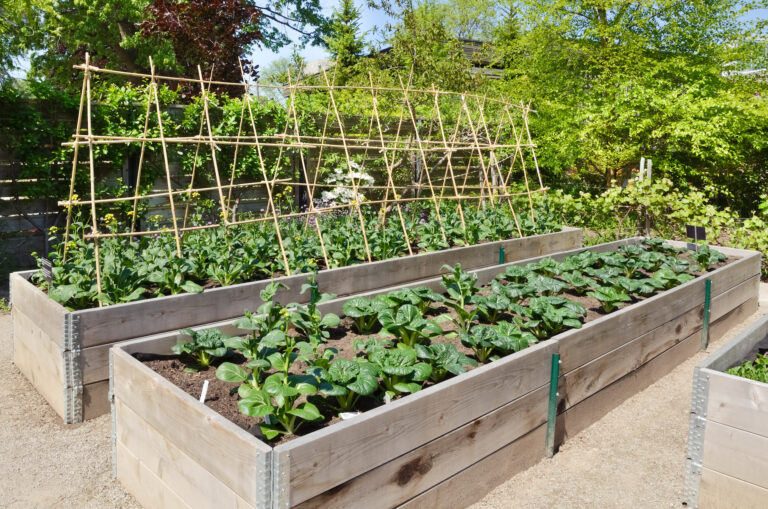
Start kitchen gardening at home and become an expert in choosing the best crops and preparing your easy kitchen garden site.
In its simplest form, a kitchen garden produces fresh fruits, vegetables and herbs for delicious, healthy meals. A kitchen garden doesn’t have to be right outside the kitchen door, but the closer it is, the better. Think about it this way: The easier it is for you to get into the garden, the more likely it is that you will get tasty things out of it. Did you forget to add the chopped dill on your boiled red-skinned potatoes? No problem — it’s just steps away.
Starting a Kitchen Garden
If you have to choose between a sunny spot or a close one, pick the sunny one. The best location for a new garden is one receiving full sun (at least six hours of direct sunlight per day), and one where the soil drains well. If no puddles remain a few hours after a good rain, you know your site drains well.
After you’ve figured out where the sun shines longest and strongest, your next task will be to define your kitchen garden goals. My first recommendation for new gardeners is to start small, tuck a few successes under your belt in year one, and scale up little by little.
But what if you’re really fired up about it? Even in year one, you may be able to meet a big chunk of your family’s produce needs. In the case of my garden in Scarborough, Maine, we have 1,500 square feet under cultivation, which yields enough to meet nearly half of my family of five’s produce needs for the year. When you do the garden math, it comes out to 300 square feet per person. More talented gardeners with more generous soils and climates are able to produce more food in less space, but maximizing production is not our only goal. We’re also trying to maximize pleasure and health, both our own and that of the garden. Kitchen gardens and gardeners thrive because of positive feedback loops. If your garden harvests taste good and make you feel good, you will feel more motivated to keep on growing.
Preparing the Garden Site
If you’re starting your kitchen garden on a patch of lawn, you can build up from the ground with raised beds, or plant directly in the ground. Building raised beds is a good idea if your soil is poor or doesn’t drain well, and you like the look of containers made from wood, stone or corrugated metal. This approach is usually more expensive, however, and requires more initial work than planting in the ground.
Whether you’re going with raised beds or planting directly in the ground, you’ll need to decide what to do with the sod. You can remove it and compost it, which is hard work, but ensures that you won’t have grass and weeds coming up in your garden. If you’re looking to start a small or medium-sized garden, it’s possible to cut and remove sod in neat strips using nothing more than a sharp spade and some back muscle. For removing grass from a larger area, consider renting a sod cutter.
Otherwise, to avoid sod removal altogether, you can use a technique called “sheet mulching,” or “lasagna gardening,” whereby you smother the grass with one or more layers of organic goodness (untreated cardboard, newspaper, loam, compost, leaves, grass clippings, etc.) in such a way that the grass underneath dies and decomposes, enriching the soil with organic matter. Sheet mulching is particularly effective for kitchen gardens started in the fall, as the sod has more of a chance to break down over the winter. One variation on sheet mulching is to use instant garden beds, which are made by laying out bags of topsoil to form beds.
Choosing Garden Crops
The most important recommendation after “start small” is “start with what you like to eat.” This may go without saying, but I have seen first-year gardens that don’t reflect the eating habits of their growers — a recipe for disappointment. That said, I believe in experimenting with one or two new crops per year that aren’t necessarily favorites for the sake of having diversity in the garden and on our plates.

One of the easiest and most rewarding kitchen gardens is a simple salad garden. Lettuces and other greens don’t require much space or maintenance, and grow quickly. Consequently, they can produce multiple harvests in most parts of the country. If you plant a “cut-and-come-again” salad mix, you can grow five to 10 different salad varieties in a single row. And if you construct a cold frame (which can be cheap and easy if you use salvaged storm windows), you can grow some hearty salad greens year-round.
When it comes to natural flavor enhancers, nothing beats culinary herbs. Every year I grow standbys such as parsley, chives, sage, basil, tarragon, mint, rosemary and thyme, but I also make an effort to try one or two new ones. One consequence of this approach is that I end up expanding my garden a little bit each year, but that’s OK, because my skills and gastronomy are expanding in equal measure, as are my sense of satisfaction and food security.
Planting a Garden: Where, When and How
Next, sketch out a garden plan of what will be planted where, when and how. To do this, you need to get familiar with the various edible crops and what they like in terms of space, water, soil fertility and soil temperatures. See What to Plant Now for this information, sorted by region and month. MOTHER EARTH NEWS also has a new, interactive Vegetable Garden Planner that makes it super simple and fun to handle planning a kitchen garden. Check out a 7-day free trial of the program.

Garden Seeds or Transplants?
When the time comes to plant your kitchen garden, you’ll need to decide which plants to start from seed and which to buy as transplants. Many gardeners choose to plant all of their crops from seed for a variety of reasons, including lower costs, greater selection, and the challenge and satisfaction of seeing a plant go from seed to soup bowl. But whether you’re a greenhorn or a green thumb, there’s no shame in buying seedlings. Doing so increases your chances of success, especially with crops such as eggplants, peppers and tomatoes that require a long growing season. (Learn more about transplanting.)
Mulch, Mulch … And More Mulch
After you’ve sown your seeds or planted your plants, introduce yourself to the kitchen gardener’s best friend, Mr. Mulch. Just about any organic matter you can get your hands on — straw, grass clippings, pine needles, shredded leaves, dead weeds that haven’t gone to seed — can be used as mulch. I bring in mulch from neighbors who would otherwise throw it away. Mulch plays three main roles: It deters weeds, helps retain moisture, and adds organic matter to the soil as it decays. I apply it to the pathways between my beds and around all of my plants. (Learn more about building healthy soil.)
When and How Much to Water Your Garden
Fruits and vegetables are made mostly of water, so you’ll need to make sure your plants are getting enough to drink. This is especially important for seedlings that haven’t developed a deep root structure. You’ll want to water them lightly every day or two. Once the crops are maturing, they need about an inch of water per week, and more in sandy soils or hot regions. If Mother Nature isn’t providing that amount of rain, you’ll need to water manually or with a drip irrigation system.

Garden Maintenance: Keep An Eye On It
Sun and rain willing, fast growers such as radishes and salad greens will begin to produce crops as early as 20 to 30 days after planting. Check on them regularly so you get to harvest them before someone else does. In my garden, those “someones” include everything from the tiniest of bacteria to the largest of raccoons. Various protective barriers and organic products can deter pests and diseases, and if you have trouble with rabbits, deer or other four-legged critters, your best defense may be a garden fence.
Succession Planting: Plant Now and Later
Getting the most pleasure and production from your garden comes from learning the beauty of succession planting. Rather than trying to “get your garden in” during one busy weekend, space your planting out over the course of several weeks by using short rows. Every time you harvest a row or pull one out that has stopped producing, try to plant a new one. Succession plantings lead to succession harvests spread out over several months — one of the key characteristics of a kitchen garden.

As you gain new confidence and skills, you can look for ways to incorporate perennials including asparagus and rhubarb into your edible landscape. And no discussion of kitchen gardens would be complete without mentioning flowers, which should be added from the start. Flowers add beauty and color to the garden and the kitchen table. They also attract beneficial insects while, in some cases, repelling undesirable ones.
How to Sow a Revolution
Safer, fresher, better-tasting, more nutritious food — that’s four great reasons to grow your own. And there’s one more benefit you’ll get when you plant a kitchen garden — spending time outdoors and watching stuff grow is great fun.
Join the Kitchen Garden Revolution!
What started as a whisper a few years back has grown into a full-throated chorus of people calling for a kitchen garden revolution. The resurgence of kitchen gardens couldn’t come at a more relevant time in our nation’s history, or in that of the planet.

Concerns about food safety are nothing to sneeze at, considering foods as seemingly benign as spinach and peanut butter have been contaminated with harmful E. coli bacteria in recent years. You can’t bank on the nutrition of grocery store fare, either. The commercially grown foods we’re eating today are significantly less nutritious than they were just 30 years ago. Breeding crops for higher yields has delivered cheaper food, but it has also diluted nutrients.
Over the next 50 years, the international community will face health, food security and environmental challenges more daunting than any civilization has ever faced. The United Nations estimates that food production would need to increase by 70 percent to feed the projected global population of 9 billion in 2050. Plus, we’ll need to grow our food in an unstable climate with a greatly depleted natural resource base.
While the challenge facing poor countries is too little food production, one of the challenges in wealthy ones is too much of the wrong type. Sixty-eight percent of the American adult population is now overweight and 28 percent of it is obese. The situation with children is even more alarming. According to the Centers for Disease Control and Prevention, one in three children will develop Type II Diabetes in their lifetime and one in two if the child is black or Hispanic.
But before you hurl yourself onto the nearest compost pile in despair, I’ve got some good news: The solutions to many of these problems are as close as your own backyard. What we need are millions of new people joining the movement by planting healthy kitchen gardens of their own or, in the case of existing gardeners, by converting their summer veggie plots into more productive, four-season gardens. You can also connect with gardeners in your area to help other people and groups (schools, clubs, companies, retirement communities, food pantries, etc.) start gardens.

Key Dates in American Kitchen Garden History
Pre-Colonial period: Native Americans develop and grow locally adapted plant varieties over the course of millennia.
1620: European immigrants begin bringing seeds and horticultural know-how from their home countries.
1772: Monticello, Thomas Jefferson’s country estate, is built and becomes home to more than 400 varieties of fruits and vegetables.
1894: Detroit Mayor Hazen “Potato” Pingree allocates 430 acres of vacant land to 1,000 families who harvest 40,000 bushels of potatoes, beans, squash and pride.
1917-1944: Americans plant about 20 million War Gardens and Victory Gardens as part of homefront efforts.
1954: Scott and Helen Nearing publish Living the Good Life, which becomes a bible of the back-to-the-land and organic gardening movements of the 1960s and ’70s.
1975: Seed Savers Exchange is founded, encouraging gardeners everywhere to grow and save seeds of heirloom crops.
1995: Chef Alice Waters plants an edible schoolyard at Martin Luther King Jr. Middle School in Berkeley, Calif., inspiring numerous school gardens across the country.
2009: With a groundswell of popular support, First Lady Michelle Obama breaks ground on a 1,100-square-foot kitchen garden at the White House. The garden becomes a platform for a new national dialogue about healthy eating and lifestyles.
Roger Doiron is the founder of Kitchen Gardeners International, a global online community of people growing their own food and helping others to do the same.







