

Growing native plants in their natural habitat in small home patches. How to identify and precision-plant microclimates of your land.
I was driving through some of upper Michigan’s bleak
sand-dune and peat-bog country a few years back, and
marveled that even scrub pine and horsetails could grow in
such sour and leached-out soil. On a rounding curve, I was
astounded to see a 25- or 30-foot-high festoon of lush
green and heavenly blue reaching for the sky. The angled
guywire of a telephone pole at the entrance to a long farm
drive hosted the most luxuriant growth of Heavenly Blue
Morning Glories (Ipomea C. ) I’d ever seen.
I pulled over to examine the base of the flowering vines. A
roadside ditch flowing with dear, tan peat-stained bog
water maintained high local humidity and watered a
waist-high growth of weeds that crowded all around the
pole-except where the morning glories were growing. Three
different-aged plantings of a half dozen vines apiece
emerged from a foot-deep mulch that had been laid over a
trio of well-used wood-slat, bushel-sized produce baskets
half-buried in the sandy peat soil. The basket rim was
solid enough to keep sod and creeping ground vines from
crowding out the Ipomea roots, and each formed a good
6-inch-high, disc-shaped raised bed.
Time was too short to arrange a polite visit to see if the
farmer’s method was as innovative as the roadside
flower-growing. But, once home I read up on Ipomea, and
learned that it is a woody-stemmed perennial vine that will
grow forever as it climbs lianas and thin tree branches in
its hot, wet tropical homeland. It is also extremely frost
tender, so it is cultivated as a half-hardy annual in
temperate climates. It wants moderate but even moisture and
a soil rich in potassium, phosphorus and trace elements,
but low in nitrogen in the early vegetative growth stage
lest the vine grow too lush at the expense of flowers.
Periodic, later doses of nitrogen are desirable.
I theorized that the Michigan farm folks had gone a long
way toward figuring out the plant’s ideal (native) growing
conditions. Most important, I guessed, was an unusually
high support so the vine was free to rise more than 30 feet
around the kind of small diameter vertical support its
tight-spiraling stems prefer.
These folks also discovered that the vines do best in open,
moving air (to avoid leaf mildew), amid a naturally
selected growth of wild native plants-a natural mix of what
we call weeds that makes it harder for insect pests to
locate their prey species among the conflicting sights,
sounds and smells.
Gardening for the New Century
Over the years I’ve tried to grow supertall morning
glories, and slowly learned the hard way-the wisdom of the
Michigan morning glory method. It embodies a new (to me)
gardening system. Till someone comes up with a better name,
I’ll call it “niche gardening”-creating a series of small
garden plots all around your place in spots that offer the
varying combinations of sun/shade, natural or created soil
type, moisture, air flow, soil warmth, and surrounding
vegetation that best duplicates each plant’s native
“ecological niche” (see Webster’s definition of “niche;”
left).
Niche-gardening applies as well-or better-to food-producing
varieties as it does to flowers, and I’d like to think of
it as the next step toward achieving a 21st century,
nature-knows-best-style home garden. After all, most of us
have already taken the first step and embraced the organic
method of raising food plants by composting kitchen, lawn,
and garden residues to enhance and nourish our soil, and by
opting for benign soil enhancers and natural pest controls
over harsh, manufactured chemicals.
But the planning, location, and layout of most vegetable
gardens still reflects the 16th century notion that mankind
has the right and duty to employ science and reason to
impose order on the “chaos” of nature. We’ve kidnapped
plant species from different natural environments all
around the globe, ranging from potatoes that evolved in the
thin, rocky mineral soils of the cool, dry Peruvian Andes,
to eggplant from the steamy living-sponge soils of
southeast Asian jungles-lined up in unnatural straight
rows, inside a rectangular plot of bare ground, surrounded
by alien plant species, and located in foreign soil
everywhere from Vancouver to Key West.
How much better production, better nutrition, and plant
health can we expect by creating specialized niches–microclimates–perfectly suited to each plant species?
Niche Plant Locations
Use your imagination. I’ve niche-planted anything from a
single tomato in an old wooden bucket, and hung it off the
porch, to a 3-foot row of dense-planted sugar peas on a
trellis in the half-shade of a big maple; to two parallel,
6-foot rows of pickling cucumbers on stakes and netting at
the back of a rose garden; to a 10 by 20-foot plot of
perennial Jerusalem Artichoke bordering the piney woods.
I’ve located others in the middle of a lawn and the edge of
a weed patch; in half-round or square-sided terraces made
from stones, logs, or landscaping timbers dug into rocky
inclines; in pots in full sun or full shade; in baskets
hanging from the barn eaves; in wood cribs suspended in the
half-shade of the apple tree; on twine strung up at the sun
end of the grape arbor; or from rope strung between trees.
Containers fit well in a niche garden. Half-whiskey
barrels, redwood planters, horse troughs, split propane
tanks and flower boxes can be bottom-drilled and lined with
crushed rock for good drainage, then planted to
strawberries and vegetables. Nantes-type carrots
interplanted with green bunching onions do especially well
for me in 18-inch-deep boxes or raised-bed niches. Oh, that
tomato I tried in an old wooden well bucket-it produced two
fruit sets through July, but developed so much root mass
that it broke the bucket. I set it into twice the soil; it
began flowering and set new fruit well into September.
Moral: A standard tomato plant needs more than a gallon of
soil to produce its maximum.
Soil
Just enough enriched growing medium to support each plant
is mixed to one’s best estimate of the variety’s precise
specifications, then placed into quart- to bushel sized
planting holes, or placed in raised beds, pots, tubs, or
terraces. Time-consuming perhaps, but you can do the work
in the off season or bad weather, and save the time wasted
in working the 50 percent or more of garden space that’s
typically used for garden paths or inter-row spacing.
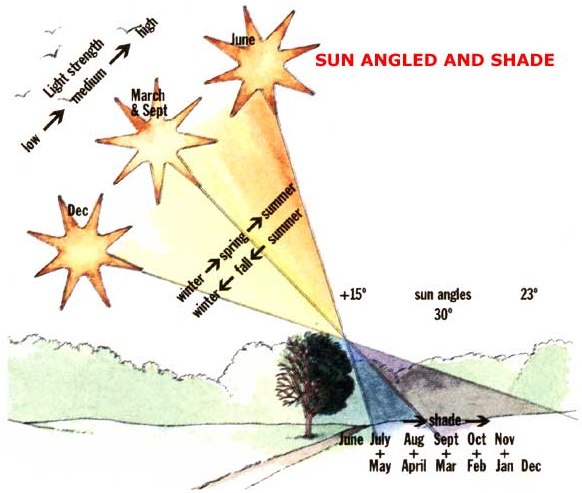
Sun
The “Soil Mixes” list (see page 50 of this issue) of plant preferences (my
findings for my soil and the New England climate; you’ll
work up different ones) suggest that not all varieties need
full sun. Indeed, a good eight hours has proven ample for
anything I’ve ever grown. Some such as pole beans can get
by with four hours of full sun or eight hours of filtered
sun (as under anti-bug netting or a lacy-leaved locust
tree). Summer lettuce and spinach actually benefit from
growing in the coolness of a moist spot in semi-shade, so
you can set niches in shade of trees or the house.
Water
If too-wet ground is a problem, you can underlay small
niches with a layer of crushed rock, dig mini-dry wells, or
even set in a few drain tiles (something that takes a major
excavation in a large garden). In dry weather, arranging
trickle-irrigation or hand-watering the absorbent soil
mixed up for niches is easy-and you aren’t wasting water on
all that bare inter-row and pathway ground. Or, you can
fill gallon milk jugs with water, punch small holes in the
lids and pinholes in the bottoms, and invert the jugs in
the soil for automatic drip-irrigation.
Garden Soil Testing
You can test soil moisture by squeezing it into clumps, and
evaluate sand content by rolling it between your thumb and
forefinger and looking at it hard. To check organic matter,
dissolve a 6-inch-long cylindrical core (or a cross-section
slice off the side of an 8-inch-deep hole) of topsoil in a
glass jar filled with warm water; stir well and compare
thicknesses of the several layers that settle: pebbles,
then sand, then clay and loam, then pure loam in density
layers. The darker and thicker the top layers are, the more
loam you have. Half loam is great; 10 percent needs more
compost.
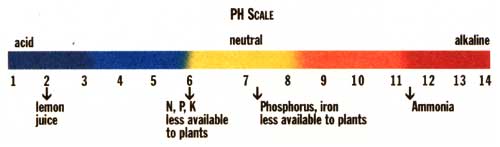
But evaluating acidity and nutrient content with accuracy
takes some skill and equipment. It’s a good idea to have
your local Cooperative Extension Service or a commercial
lab test your soil before fine-tuning separate niches.
Costs are nominal, and it will give you a base point to
work from. Then, to develop niches with meaningful
differences, you need to evaluate light strength and soil
temperature, assure that the pH is correct within fairly
precise limits, and accurately access nutrient levels.
For this, you really need a set of test instruments. They
needn’t be elaborate or costly (after all, you aren’t a
USDA Aggy Research Station).
A soil-thermometer that’s robust enough to hold up to
repeated plungings into soft soil can be found in most seed
catalogs for under $10. A really sturdy model built like an
oven thermometer costs $25 or more. Temp differences will
be most marked in spring and fall as weather changes. You
will be surprised at the variances often +/-10 to 20
degrees-in surface temperatures, between soil under mowed
lawn and under high growth, for example, at the same time
of day, even when both are in full sun.
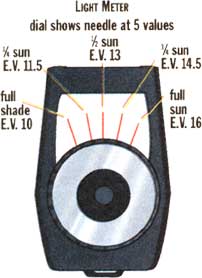
I try to find time to record the sun/ shade/light strength
(with a cheap little reflective photographic light meter)
and temperature of niches early in the day, midday, and in
the afternoon several times a year. Obviously,
full-sun-loving plants want the brightest spots.
Warmth-loving tomatoes, peppers, etc., do best in warm
soil, and plants such as cabbage prefer cool feet. Or, you
can lay black mulch, reduce shade, or set dark-colored,
heat-sink rocks around to warm soil; or add a deep organic
mulch, plant fast-growing shading annuals, or erect a lath
house or net cover to cool the soil.
I have tried those little one-piece instruments that have a
probe or two that you stick into the soil to get a readout
on a built-in dial-and found them next to worthless. All
they do is make a very crude reading of the ability of soil
to conduct electricity–which is affected more by
water content than pH, nitrogen content, or whatever the
meters purport to read. Easier, faster, cheaper, and more
accurate is an inexpensive soil test kit like a a mini
chemistry set that uses reagents, test tubes, and litmus
paper or color-coded readings. My favorite is the
Lustre-Leaf pH/N/P/K kit that gives you 40 tests (enough
for 10 niches). (Only $14.95, from Johnny’s Selected Seeds,
Albion ME.)
Carry a gallon of uncontaminated distilled water (not tap
water or even jugged well water) to clean out the test
vials, and you can do niche garden tests for pH and
nutrient levels in an hour or two. Values respond slowly to
modification unless you use severe chemicals, so an annual
test is sufficient once you get your niches established.
Additives
To increase pH one half point (say, from 6.0 to 6.5), till
in a good pound (a double handful) of ground limestone per
20 square feet (a niche with sides of 4 and 5 feet). The
same amount of wood ash does the same and works faster, but
doesn’t last as long. To decrease pH make soil more
acid-till a bushel or more of peat moss, leaf, or pine
needle mold into that 20-square-foot niche, and don’t lime.
To add nitrogen, add cottonseed meal, grape mast ,or any
other agricultural processing byproduct-or blood meal or
fish meal-into planting holes or seeding trenches. For
phosphorus, add in as much phosphate rock as you added
lime. Or bury a scant handful of bone meal in planting
holes (bury it deep so the household hounds won’t dig it up
and make themselves sick). Potassium is best added to
planting holes via green sand, a natural deposit that
sometimes needs a special order from the local feed store,
but is worth it. Or, water with diluted fluid kelp
concentrate, which will also supply trace elements.
Water Gardening
Many country places host small streams or ponds. And garden
pools, with waterfalls and small streams created by
recirculating stored water with small pumps are becoming
popular garden ornaments. I’ve expanded on the
country-kid’s love of building rock dams in roadside
ditches: I redirected a little year-round stream that
emerges from a rock outcropping in the hill above the house
so it now runs through the niche-plot-sprinkled side yard.
Practically any shady freshwater environment-even a
natural, low, damp spot in the woods ,or one that’s
maintained with a dripping hose at the bottom of your
garden, can be used as a salad-green niche, for growing
watercress, for example.
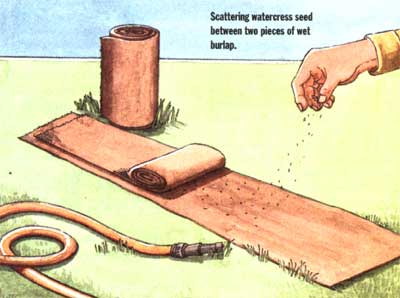
Watercress is slow to germinate and takes its time growing,
so its best to start the seed inside at a cool temperature,
between wide strips of coarse, wet fabric. I use burlap
that I keep moist till little sprouts appear, then keeping
it all constantly moist-harden-off the sprouts for a week
on the cold porch, then insert the damp burlap strips in
light shade just at the stream edge. Margins of the cloth
are buried in the wet mud, with rocks placed strategically
to hold the center down. The cress will root and grow at
its own sweet pace, and eventually colonize the bank and
slower-moving water. You will have to grub out weeds that
try to crowd the cress out. Don’t over pick; leave a little
rosette of leaves on each stem. Don’t pull out the roots
either-this is a perennial.
Water in my spring emerges from the rocks deep underground
at a uniform 40 degrees Fahrenheit year-round and encourages the cress
to an early start, so it will provide salad cuttings before
any ground-grown green. A feeding with liquid fertilizer in
fall when water is lowest and the bank driest will do
wonders for next year’s production.
Plant Neighbors
Niches can be surrounded by flowers, lawn, shrubbery, or
weeds. Indeed, a growing number of natural-culture garden
experts believe that a surround of opportunistic weed
species is not only good for the soil, but also good for
cultivated plants. As in the Michigan morning glory
example, a natural growth of native plants serves both to
balance nutrients in the soil and to conceal the often
tender cultivated varieties from pests. Whereas in a
conventional garden, long and orderly rows of are lined up
like pins with unnatural, bare strips at each side,
signaling that your lovingly-raised cabbage transplants are
begging to be mowed down by the first groundhog, aphid, or
flea beetle that happens to drop by. A conventional garden,
with plants lined up for the convenience of mechanical
cultivation, is not a triumph of man over nature’s chaos,
but an insult to the natural order-which is not chaos at
all, but a seemingly random function of sun, wind, water,
time, and the hand of the Creator: a many-million-year-old
rationality and organization of a higher order.
Managing Weeds
Niches can be made nearly self-tending by setting
transplants and fast-sprouting, large-seeded varieties such
as beans through holes in a soil cover of one of those new
landscape fabrics. These fabrics permit air and water to
penetrate, but block sunlight, to keep weed seed from
spouting near enough to your food plants to compete for
food and water; it lies flat with only a rim of soil and a
rock or two in the middle to hold it down, and does not
wind-shred in a single season like old-style black plastic
mulch.
You can’t direct-sow small-seeded varieties such as lettuce
and carrots through sheeting. I like to sterilize the top
inch or so of soil in smaller, densely planted small seed
niches to kill mold spores, insect and slug eggs, and weed
seed (do this by heating it heat it in an oven at 350 degrees Fahrenheit
with a potato; it’s done when the potato cooks through).
Using pelleted carrot seed, and mixing lettuce and other
tiny greens seed with sand and broadcasting it, reduces
need for thinning.
Weed seed can blow into even a sterilized niche, and some
help is needed keeping the weeds’ rapid and vigorous growth
habit from swamping the vegetables. In small niches, two or
three shallow hand-hoeings will usually do.
In niches too large to sterilize soil, a little Mantis-type
power cultivator is indispensable. Even if it means
delaying planting a little, I like to till three times-a
week apart-in spring before setting out plants. This
kills most weeds as they sprout.
An old-hay mulch applied once soil is warm and summer-dry
will keep weeds down during the growing season. But when
most large, long-term varieties (winter squash, dry beans,
crucifers, tomatoes, peppers) are beyond the vegetative
growth stage and are setting or maturing produce,
permitting ornamental flowers or weeds to grow up around
them creates a living mulch to cool soil and retain
moisture (so long as you mow or top the weeds before they
make seed-especially that double-drafted crabgrass).
Planning
Custom-mixing soil for every plant is not for those of us
with time, space, and need or dedication to grow all our
own food. When I was feeding a young family, I grew
potatoes, corn, peas, beans, winter-keeping root
vegetables, and cabbages for quantity and winter-keeping
quality rather than eating quality, ease, and ornamental
value. But, for most of us these days, time for gardening
is scarce, and the trend is smaller gardens, and less but
higher quality–produce. Still, despite all our garden
planning in the chill of February, too many conventional
gardens are overplanted in a burst of spring enthusiasm.
Then, keeping weeds down through the
summer–harvesting even–often becomes an onerous
chore.
Selecting and modifying microclimates and to identify and precision-plant microclimates will make that winter
planning exercise an annual one in experimentation that
will become more sophisticated, productive, and rewarding
as years go by. You might have less production overall than
you get from a big conventional garden. But with well
planned succession-planting of the small, enriched-soil
plots, you will have a constant supply of fresh produce;
none will be wasted, and you’ll harvest the most per plant.
Any niche is liable to invasion by sod or nearby weed
roots. I keep it out with a barrier made from old
(untreated) wood shingles gleaned from a re-roofing job.
You can also buy plastic edging in rolls, or interlocking
panels. Plastic or overlapping shingles hammered 6 inches
into the soil form a solid shield around the planting soil.
For raised beds, I double up the shingles and leave 3 or 4
inches sticking above soil level; then fill with custom
planting mix.
Hanging Vegetable Baskets
My favorite niches aren’t snugged into the flower garden,
terraced out of the hillside, or plugged into the roadside
spoil by the telephone poles. They hang from trees,
buildings, arbors, and poles. You’ve surely seen, and
probably tried, those wire-mesh “summer baskets” lined with
sphagnum moss, filled with growing medium, and sporting
lush annual flowers. How about growing vegetables in them?
Commercial basket-plants are often dosed with flowering
hormones to look good at the market, so I’d not recommend
recycling an entire basket. But you can glean used basket
frames in the fall from neighbors or the dump, buy new ones
from florists, or make your own from soft wire or coat
hangers. Leave used frames out over winter or sterilize in
a weak solution of water and laundry bleach. Line with
bark, dumps of native mosses, or live sphagnum from the
florist–or with burlap, horticultural fabric, or any
other sheet material that is permeable so excess water can
flow out. Then, fill with sterilized soil mix, and hang in
full or partial sun from posts, a laundry pole, under tree
limbs or from the porch or windows-indoors or out.
You will have to water baskets if rain is scarce; however,
this chore is offset by a virtual lack of pests. Insects
and most disease vectors expect to find flowers and veggies
growing at soil level. Ground pests such as slugs and
ground beetles can’t get at hanging baskets. Flying pests
in eating or egg-laying mode seldom fly much higher than
their prey plants. Consider the little greenish-yellow
sulfur butterflies–they lay eggs that produce those
smooth, green caterpillars, which can chew members of the
cabbage family to coleslaw before its picked. You see them
in pairs, rising up in spirals above the garden in their
delightful mating ritual. But, normally they flit about
just at broccoli top altitude. Even if they smelled the fat
cauliflower growing in a basket hanging from the apple
tree, they wouldn’t be able to locate it,unless they have
Superbug X-ray vision that can see up through a basket full
of moss and soil. And flying pests like coddling moths and
curculios that are attracted to apples don’t care for
broccoli or collards.
What to grow in baskets? The smaller leaved hybrid broccoli
and self-blanching cauliflower does well-and there’s no
chance for them to get club root. Peppers are good. So are
bush-type summer squash and cucumbers.
You can try the hanging-basket culture of (edible) vining
nasturtiums, European (burpless) cucumbers, pati-pan or
other small-fruited summer squash, and even mini-melons. if
you support the fruit in mesh bags. But my favorite
basket-grown plant is everyone’s favorite vegetable:
tomatoes.
Hanging Tomatoes?
Yep. In its semitropical South/CentralAmerican origins, the
tomato is a rampant-growing perennial vine with stems that
kind of inchworm out from the plant base, setting roots and
new plants wherever stems contact soil.
For basket-growing, I’ve done best with wild small-fruited,
“cherry”-type varieties with a rank, wholly indeterminant
growth habit. The vine has no “up-growing” tendency, so the
main stems, and then the suckers that grow from each node,
happily flow over the basket rim, producing great festoons
of small fruit. Johnny’s Selected Seeds offers the best
variety, including red, yellow and gold varieties in round
and pear shapes, featuring several newly-released wild and
semi-wild types from Mexico that produce hundreds of
super-rich-flavored little fruit.
Full-size, indeterminate plants go into full-bushel-size
baskets. The new Miniature Tiny Tim is a patio-type that
grows no more than a foot high, and can be grown in
gallon-size baskets or hanging ceramic pots with drain
holes and a layer of crushed rock at the bottom. (From the
Canadian seedsmen Vesey’s, York P.E.I., Canada. In
the U.S.: Calais, ME.)
Tomato soil should be low in nitrogen during the early
growth stages, and no healthy plant should be fertilized
till first fruit set. Thereafter, the weather will be
getting hot and summer-dry, and I maintain constant soil
moisture (easily checked by hefting the basket from the
bottom as it hangs) by watering as needed with manure or
compost tea, or a weak solution of soluble 10-5-20 plant
food.
If you agree with me that there’s no more efficient use of
manufactured fertilizers than to be applied in a weak,
soluble solution as foliar spray or added to a rich organic
soil, you might try the special tomato food Phostrogen:
12.5-5.0-24.5, amended with a full-balanced nutrient
package and the extra calcium needed to prevent blossom-end
rot. (Also from Vesey’s.)
Look Ma, No Bugs!
Think of it, with hanging baskets there’ll be no cutworms
to gnaw off your young, hand-raised tomato transplants at
ground level. No tomato hornworms to devour a handful of
leaves overnight. No soil-born rots to ruin ripe fruit or
wither leaves. No slimy slugs sneaking around under your
ground mulch and no marauding mice or voracious voles
nibbling almost-ripe fruit. And with the baskets hanging
open on all sides to the air, you can control soil moisture
at surface and at depth to prevent most rots, wilts, and
mold problems.
Mix & Match: Companion Planting
It’s most fun to combine a variety of complimentary or
companion plants in a basket or ground niche. I plug
insect-repelling miniature marigolds into vacant spaces
everywhere. In near-full sun, loose loamy soil, and
moderate moisture, plant your own ratatouille: eggplant,
sprouting broccoli, tomatoes, garlic, sweet onions, and
basil. Off to one side in a niche that will receive
late-season sun, combine parsnips, brussels sprouts, and
leeks-all long season crops for post-frost harvest.
In half-shade, cool soil and a super-nitrogen-rich soil,
plant a random scattering of varicolored salad greens. This
year (1997) has been designated “Year of the Mesclun”;
that’s French for a mix of greens that are snipped off one
leaf at a time as soon as they begin making inch-long leave
sin as little as 14 days. You’ll find the seed catalogs
featuring claytonia, mustards, arugula, corn salad,
cresses, endive, orach, purslane, raddicio, tetragonia,
sorrel, a dozen Oriental leaf veggies, and more leaf-type
and loose-head lettuces than you thought existed.
Like their cousins the morning glories, sweet potatoes
(Ipomea batatas) are a tropical vine that really
should be grown in planters or hanging baskets, as much for
the luxuriant, happily dangling, bright green foliage with
red stems that lasts all summer as for good eating at
season’s end. A mossy-sided hanging basket with sweet
potatoes planted around the rim so the glossy vines drip
down, and a miniature tomato, a brightly-fruited
mini-pepper plant or a red or white-fringed flowering kale
filling the middle is sure to intrigue visitors to your
niche-garden, almost as much as the 40foot high garlands of
morning glory growing up the telephone pole out front.
Soil Mixes
The basis of my niche gardening soil is a mix of half
compost or leaf-mold from the woods, 1/4 vermiculite or per
lite, and the rest a mix of muddy ocean beach sand (for
tilth and ocean trace elements) or common sand and an ocean
seaweed (kelp) concentrate.
Further amendments are customized for each plant species.
For tomatoes: to each bushel of mix, I add one handful each
of ground limestone (for long-term pH-balance and calcium
to prevent blossom-end rot), a little wood ash (for extra
potash and for quick pH-sweetening), phosphate rock and/or
bone meal (for phosphorous) and greens and (for potassium).
More wood ash is added if needed to reach a pH of 6.5.
To avoid hollow-heart in potatoes, brown-heart in turnips,
black-spot in beets, and as a general tonic for cabbage,
broccoli and other crucifers, carrots, greens including
scallions, garlic, and onions, I add a tablespoon of
20-Mule Team Borax per bushel of balanced nutrient mixes.
This is to provide a good dose of Boron, but don’t over do
it.
Salad greens, spinach, and any other plants raised for
their leaves are encouraged to make rapid early-stage
(vegetative) growth with extra nitrogen via a generous dose
of cottonseed, fish, or blood meal. Potatoes need a deep,
loose, moderately acid soil with a pH something just under
6.0, but no lower than 5.0. Leaf or pine-needle mold is a
good addition, along with a sprinkling of gypsum to supply
calcium and sulfur. I save gypsum wallboard from home
remodeling projects, or scrounge it from the town’s
demolition dump and crush it with a hand sledge. I remove
all face paper from both sides of the drywall, as it can be
treated with unidentified fireproofing, water seal and
other chemicals I don’t want in the soil.
I test each batch of soil mix for pH after moistening a
sample and letting it steep for an hour or more. With our
acid soil, I’ve never found it too “sweet.” Normally, I add
lime and/or wood ash to reduce acid and reach the desired
reading within .3 to .4 points on the pH scale. This is too
precise a test and too much custom-mixing for a large
garden plot. But its a snap with a trash-barrel full of
light, dry planting soil, or digging the good stuff into a
6-to 24-square-foot niche.
Fresh-mixed soil goes into each niche each year-or at least
into the center of each row or container. The “used soil”
that it replaces gets carted, along with old plant roots
and stems, to the compost, where it is inter-layered with
kitchen and garden leavings, forest leaf molds, grass
mowings, lime, cottonseed meal when available and sawdust
when its not, and manure.
Crop Rotation
Its never advisable to grow the same crop family in the
same soil for more than one year in three. Rotation of
varieties with similar growth requirements among niches
offering similar conditions is easy. But when I’ve found a
location that is absolutely perfect for a single variety, I
rotate soil in the niche–by digging out most of the
planting medium, carting it to the recycling heap, and
replacing it with fresh soil.
A lot of digging and hauling you say? I figure that a
plant’s root system is shaped like a below-ground mirror
image of its above-ground foliage, and (dry weight of) the
soil that it grows in weighs about the same as the plant
growth. I’d rather haul the soil that grows my
succulent/crunchy homegrown mesclun mix salad greens than
have to carry the greens home from a supermarket after
paying almost $10 a pound for the privilege. Wouldn’t you?






