
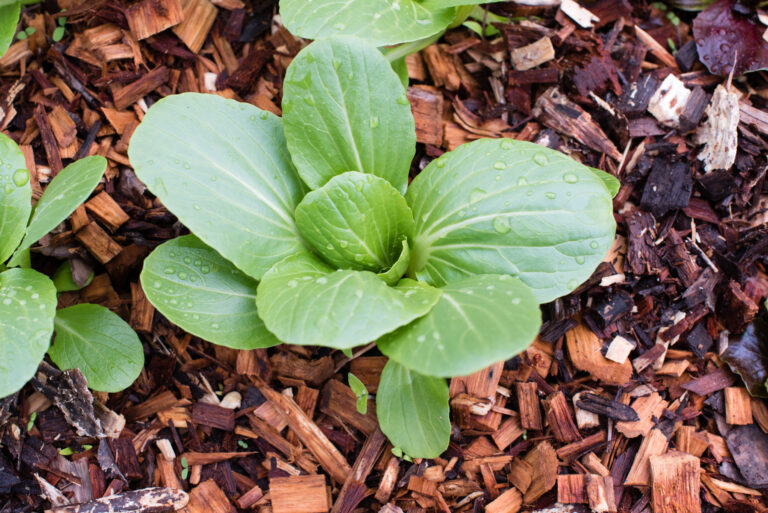
What is mulch used for? It depends on the kind of mulch! Learn how to choose what kind of mulch is best for your garden, and how to make your own mulch.
One of the hallmarks of any healthy organic garden is the effective use of mulches. Defined as “materials used to cover the soil’s surface,” mulches help control weeds, prevent disease, conserve moisture, maintain consistent soil temperatures, enrich the soil with organic matter and just make the garden look good. According to Texas A&M University, a well-mulched garden can yield 50 percent more vegetables than an unmulched garden space, thanks in part to mulches’ ability to reduce foliage and fruit diseases.
Most gardeners prefer biodegradable mulches, such as compost, grass clippings, leaves, or straw, because they decompose into soil-building organic matter. In vegetable garden pathways or in orchards, sawdust and wood chips are hard to beat as perpetual mulches (although you can also use wood mulch to build good garden soil). Here, we will focus on vegetable garden mulches used during the growing season, when their immediate purposes are to suppress weeds and diseases while moderating soil temperature and conserving moisture.
What Is Mulch Used for?
The longer a crop’s growing season, the more likely it is to benefit from mulching. In terms of weed control, the timing of the application of the mulch can be crucial to its effectiveness. For example, you could get good weed control at the start by mulching with newspaper and grass clippings over the area where squash or melons will run. But by the end of the season, the plot will be knee-deep in weeds that can’t be pulled without mangling the vines, so the best you could do at that point would be to cut back the weeds before they shed unwanted seeds. With peppers and tomatoes, however, it’s better to mulch later to get more sustained weed control. Weeding by hand for the first month or so, and mulching after weeds have been subdued, will usually keep weeds down for the entire summer.
To enhance weed control provided by organic mulches, many gardeners place newspaper beneath other organic mulches. Overlapped sheets of newspaper — about six sheets thick — will block light that could pass through thin layers of grass clippings or weathered leaves, resulting in far fewer weeds.
Make Your Own Mulch
The best vegetable garden mulches are those that your property produces itself, such as grass clippings, leaves and compost made by combining kitchen and garden wastes. Grass clippings are particularly useful because they contain abundant nitrogen and other nutrients, which feed both soil life and plants. If used as mulch over fertile, organically enriched soil, a 2-inch blanket of fresh grass clippings can provide all the nutrients most crops need for the season.
I’ve begun developing the area over my septic field (where trees and other deep-rooted plants can’t be grown) into a special patch for grass clipping production. By seeding in well-adapted grasses and clovers, I hope to have a lush plot that can be harvested four or five times a year using my walk-behind mower and bagger. This should satisfy about half of my mulch needs during the summer months. You can collect grass clippings from your neighbors, but if you do, make sure you don’t have compost contaminated by persistent herbicides.

Leaves gathered in the fall make fine mulch, too, although black walnut leaves should be avoided because they leach chemicals that inhibit the growth of tomatoes and many other plants. All leaves are easier to handle and more likely to enhance plant growth if you run over them with a mower once or twice before gathering them up. If you don’t have a bagger but do have a mower that will spew cuttings off to one side, you can quickly make piles of chopped leaves by mowing in concentric circles and directing the shredded leaves toward the center of the circle.
In my garden, I especially like the way long-vined squash behave if given a summer mulch of leaves over newspaper, so I go ahead and pile leaves on or near next year’s squash row in the fall. Indeed, any vacant veggie bed makes a fine winter holding place for leaf mulch. The pile will suppress cool-season weeds and attract earthworms, which are always more numerous under mulch.
Still, I need more mulch! As the public mulch supply has become less trustworthy (because of killer compost), I’ve stopped buying hay. Instead, I find myself growing more plants specifically to turn them into vegetable garden mulch. Twice a summer, I cut back waist-high comfrey plants that grow along a half-shaded fence. Persistent yet non-spreading, comfrey produces lots of big leaves that can be used to mulch beneath peppers, tomatoes, and even sweet corn. An added bonus: Between cuttings, comfrey’s blue blooms attract lots of pollinators.
Other options for growing mulchable vegetation include maintaining a plot of tall perennial clover that can be cut with a scythe, or including dedicated, double-cropped, mulch-producing plants in your garden rotation plans. Based on biomass crop-production research conducted in 2006 at Iowa State University, you could try the idea of growing a winter-hardy grain from fall to spring (rye, triticale or wheat) followed by sorghum or a sorghum/Sudan grass hybrid during the summer. (In climates with mild winters you could use crimson clover or oats for the winter crop.)
Either way, you’ll come away with a cool-season mulch crop to harvest in early summer — just when you need lots of fresh, clean mulch. Another mulch crop will come along during the growing season’s second half, with another in time for mulching beds in fall and winter. (Sorghum regrows if cut back by half its size.) Winter-killed sorghum plants will mulch the soil through winter. In spring, you can turn under or gather up and compost the remaining sorghum skeletons and rotate the bed back to vegetables.
Other parts of your landscape can be tweaked to produce more mulch, too. As long as you avoid invasive species, large ornamental grasses can produce several armloads of straw when they are pruned back in late winter. Top choices include giant miscanthus (Miscanthus x giganteus) and ‘Karl Foerster’ feather reed grass. Growing seed-sterile varieties of giant miscanthus (maiden grass), researchers at the University of Illinois achieved double the straw yield typical of switch grass, a popular native grass grown for hay. When I cut back my big clump of maiden grass in late winter (a pruning saw works well for this), I usually get enough “hay” to mulch a 2-by-20-foot row.
Hot Weather Alternatives to Mulch
Organic mulches cool the soil, which is great if you live where summers are hot. In Texas, 4 inches of organic mulch is recommended for top performance from tomatoes, peppers and other summer vegetables. But in climates with short, cool summers, a thick mulch can become a slug haven that keeps the soil cold and clammy.
The solution? Thin sheets of black plastic film mulch. Numerous studies have shown that black plastic film mulch improves the performance of many plants by warming the soil, while also keeping it moist and free of weeds.

For several years, I’ve experimented with two alternatives to black plastic film mulch: roll-out paper mulches and cornstarch-based biodegradable plastic films. A double thickness of biodegradable black film gave decent weed control, but I didn’t like seeing bits and pieces of it leftover in the soil the following season. Left bare or topped with organic mulch, I can’t say that biodegradable plastic films or roll-out paper mulches showed noticeable advantages over old newspaper.
In some situations, the use of black or colored plastic mulch, which runs $12 or so for a 4-by-20-foot piece, may be worth the trouble and cost. Colored plastic film mulches are only as thick as lightweight garbage bags, so they usually can’t be reused. The special single-season uses for colored plastic films are summarized in “Colored Plastic Mulches: A Rainbow of Benefits,” below.
Mulch First, Dig Later
Many research studies have compared how crops respond to organic materials used as a surface mulch versus mixing the same materials into the soil. Vegetable crops vary in how they respond to the direct incorporation of leaves, wood chips, yard waste compost and other organic materials into the soil, but yields are almost always better if organic materials have been applied as mulches than when the fresh materials have been mixed into the soil. So, when in doubt about how to use any organic material to enhance plant growth while enriching soil, first try applying it as mulch.
Colored Plastic Mulches: A Rainbow of Benefits
Colored plastic film mulches offer special benefits unique to their hues. If you don’t have these needs, organic mulches may do a better job in the long run. Organic gardening standards allow the use of plastic films as long as they are gathered up at the end of the season.
- Black. Controls weeds and warms the soil beneath by up to 7 degrees Fahrenheit. Black film mulches work best where summers are mild. While more expensive, black plastic landscape fabric allows water to pass through it, and can be reused for several seasons.
- Brown. Works like black mulch, but looks better in the garden and may also be available as reusable fabric.
- Red. Reflects far-red rays from sunlight back onto plants, which can improve production of tomatoes by 10 to 30 percent.
- Green. Can improve the performance of squash, melons and watermelons in climates with cool summers.
- Silver. Confuses thrips and makes flea beetles nervous, so can be useful where either pest needs better management, especially in warm climates.
- White. Controls weeds without warming the soil, so it makes a good substitute for black plastic in climates with hot summers.
- Clear. Warms the soil for early spring planting more so than black plastic does, but doesn’t do as good a job at controlling weeds as the black plastic.
Contributing editor Barbara Pleasant gardens in southwest Virginia, where she grows vegetables, herbs, fruits, flowers and a few lucky chickens.






