


Last fall and winter, I cut enough firewood to heat my
seven-room house and bring in a substantial profit
…even though my home is in the heart of suburban New
Jersey, only 30 minutes from midtown Manhattan! And if you
live in or near a large city, as I do, you might also be
able to keep your woodpile high–while earning a steady
income–by cashing in on readily available
free fuel.
Just about every country dweller realizes the value of good
cordwood, you see, but in the cities and suburbs great
quantities of this valuable natural fuel go to waste every
year. Scrap wood from urban building projects is just as
often discarded as it is recycled, and streets in many
older residential neighborhoods are lined with massive oaks
and maples that are regularly trimmed. So anyone with a
little free time, a few tools, and some elementary
knowledge of woodcutting can help him- or herself to
a bonanza of free-for-the-hauling firewood.
Open for Business
I launched my career as an urban lumberjack when Hurricane
David’s violent winds littered the streets of my New Jersey
town with enough tree trunks and tree limbs to fuel a whole
battalion of stoves.
As I watched the city’s cleanup crews feeding cord after
cord of perfectly good wood into the steel jaws of chipping
machines, I had a brainstorm: Who would object if I were to
reach some of the fallen timber before the
municipal workers did, and cut the logs to cart home for my
fireplace? I set to it right away, and within a couple of
afternoons–using only a bucksaw and a compact
car– I collected nearly two cords of wood!
After that encouraging start, my project quickly mushroomed
into a small but steady business, which brought in over
$1,000 last year (not including the cash I saved by
reducing my own heating bills). I’ve discovered numerous
sources of free wood to supply my own fireplace and stove. I now have a long list of customers to whom I can sell
the surplus, and my profits have enabled me to buy a
chain saw, a used pickup truck, and a new airtight
wood stove.
I’m willing to bet that you could easily duplicate my
success whether you plan to cut wood just for your
personal needs, or to harvest enough to start a full-scale
delivery service. However, although urban lumberjacking is
relatively easy to break into, it isn’t an ideal
line of work for everyone. The initial investment in
equipment doesn’t have to be large, but you will have to
spend many hours cutting, splitting, and stacking wood. If
you’re not prepared to make that kind of commitment, you’d
better plan to pay for having your fuel delivered to your
doorstep this winter. On the other hand, if the idea of
being your own boss and working up a good honest sweat with
vigorous outdoor work does appeal to you, then
read on …and good luck!
Where to Find Free Wood
As you begin to collect stock for your business, you’ll
probably gain a new understanding of the term “windfall,” since your main source of scrounged wood will be trees
and limbs that have been blown down. In fact, you can
sometimes gather a whole year’s inventory after just one
major storm. City maintenance teams usually clear the
streets of broken limbs within one or two days after the
skies clear, though, so you’ll have to move quickly. To
save time, simply saw fallen trunks and large branches into
the longest pieces you can fit into your vehicle, then
drop them off at home before heading back to the streets
for another load. (Later on, of course, you can cut and
split the large logs into fireplace and stove lengths.)
Ice storms often provide almost as much wood as heavy winds
do. The winter tempests generally dislodge smaller
branches than do hurricanes or tornadoes, but you can
always use more kindling …and remember, it’s all free, so
don’t be too choosy!
Do be careful, however, about what kind of wood you take home. Sometimes you’ll come across a tree or a
limb that’s fallen during calm weather, for no apparent
reason. Examine such specimens carefully, because they may
be infested with wood-eating insects. On the other hand,
many deadfalls are perfectly good, and it’s wise to explore
new neighborhoods every once in a while–or simply to
vary the route you take to work–in order to keep an
eye out for such “gifts.”
Believe it or not, homeowners will at times actually assist
your wood-gathering efforts by stacking fallen or pruned
branches at the curb. Of course, the leavings will only be
carted off by the city sanitation department if you don’t
haul them away, so take advantage of the situation. Simply
knock on the door. and ask the resident’s permission to
remove some of the timber he or she has left at the curb.
Most of the time you’ll receive an affirmative answer. If a homeowner hesitates, you might offer to chop up
some fireplace lengths in exchange for the rest of the
load.
It’s even possible to find finished lumber that’s
been thrown away! For example, a builder who recently
cleared a large wooded lot in my neighborhood provided a
double bonanza. First, he left all of the logs
(conveniently sawed into perfect fireplace lengths) for
scavengers like me. Then later when the house construction
was finished–I was able to collect hundreds of broken
2 X 4’s and other odd-sized boards, which I split into
piles of kindling.
When there hasn’t been a storm for months and all your
other usual sources of free wood are exhausted, pay a visit
to the town or county landfill. Either one might be your
best source of up-for-grabs fuel
…provided, of course, that dump scavenging is legal in
your area. Logs that are too big for the city’s chipping
machines are routinely left in such places to rot. These huge timbers often measure over two feet in diameter.
However, it’s likely to be against regulations to use a
chain saw in the dump, so you’d better take along some
strong friends to help you load the monsters. You
can cut the logs to size when you get home.
Yet another way to round up fireplace fuel is to
trim unwanted wood from people’s yards. You’ll usually be
working on small-scale “cases” which most tree surgeons
would charge heavily for, but which can be handled
by anyone with a ladder and a few tools. Of course, you’ll
have to be careful not to tackle jobs that really do need a
professional’s attention (such as removing an 80-foot oak
that’s leaning precariously over a $200,000 residence).
However, a suburban homeowner who wants to get rid of a
15-foot apple tree that’s no longer bearing fruit would be
a perfect customer for your cut-it-and-haul-it services.
(And, don’t feel any guilt about charging $25 or $30 for
your time and effort, either; the pros would likely
charge two to three times that much! )
Equipping Your Business
If you plan to get into urban woodcutting on a commercial
scale, you’ll soon find that you can’t function without a
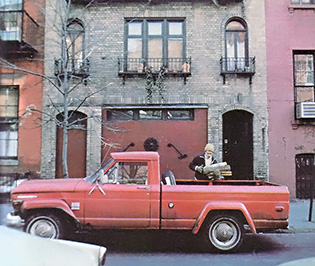
truck and a chain saw. Passenger cars don’t usually have
the suspension needed to carry large quantities of wood
safely. Even a van–although it may have ample
room–likely isn’t adequately sprung for hauling heavy
loads. Once I had tired of loading the trunk of my compact
car over and over again, I purchased a 3/4-ton ’69 pickup,
and it’s worked very well for transporting logs and
delivering split cordwood. If you’re concerned about gas
mileage, you might want to consider buying one of the
smaller-bed trucks …but remember that you won’t be able
to load it with as much wood as a larger model could
handle.
The amount and kind of cutting you plan to do will
determine the size and weight of saw that best suits your
needs. For my medium-sized business, I have found a
3.2-horsepower machine with a 16-inch blade to be very
satisfactory. (Be sure to buy a gas fueled model, though,
since the electric units are often underpowered …and you
can’t be bothered with dragging along an extension cord
every place you go.) In addition to a trustworthy saw, your
beginning woodcutter’s tool kit should include a six- or
eight-pound maul, a sledge of the same weight, and a couple
of wedges.
Marketing the Surplus
Whenever you cut a load of wood, try to split each log into
the smallest pieces practical, to help it season quickly.
Once the wood is processed and stacked, you’ll want to let
it “cure” for at least nine months before marketing it.
Once it’s well seasoned, you should have little trouble
selling your surplus wood, as long as you charge a fair
price and give an honest measure. Of course, it also helps
to undersell the competition by a slight margin. In my
area, a cord of seasoned wood sold for $100 (and up) last
year. I offered my stock at $90 a cord, and I couldn’t fill
all of the orders I received as a result of
word-of-mouth advertising around the neighborhood!
Furthermore, I supplemented my suburban
lumberjacking income by selling small loads of wood to
apartment dwellers in Manhattan. Most city folks are used
to paying astronomical prices even for kindling, so I had
no trouble at ail securing orders for my less expensive
bundles (I checked local prices, then cut them by 10 to
20%) .
You might also find that, in addition to being a very
salable item, split wood is a valuable commodity on the
bartering market. Last winter, for example, a
colleague drove me to work every day for several weeks in
exchange for a small load of fireplace logs. Later, a
friend of mine who’s an expert plumber repaired my toilet
in return for stovewood.
Hired Hands
On occasion, you may find it necessary to hire a few
part-time helpers to assist with the tasks that are just
too big for one person to handle. I occasionally employ a
couple of strong high school students to lift heavy logs
and to carry wood long distances. The young people work
happily for the minimum wage (since that’s more than
many after-school jobs pay).
When I need assistance with lighter chores such as moving
split and seasoned timber from the garage into the truck or
onto my own porch–I sometimes recruit a couple of the
neighborhood youngsters who invariably show up to watch
“the guy with the garage full of wood”. The children are
enthusiastic volunteers, and I can repay them with a mug of
hot chocolate and 50¢ or so.
Problems … and Rewards
Of course, no business is without its negative
aspects, and any number of problems can befall the urban
lumberjack. My biggest difficulty has been a lack of
storage space. My garage is always packed to the rafters
with drying wood. I’m also hard pressed to find a
suitable area in which to split and store the fuel. In
fact, if my customer list expands this fall, I’ll have to
rent another garage or fenced lot where I can process the
orders.
Equipment failure can also hinder the smooth operation of
your enterprise. I missed out on the windfalls that
resulted from a tremendous storm last summer simply because
my chain saw was in “dry dock” at the repair shop. An old
truck can be counted on to conk out at any time, too
(usually when you’re swamped with orders to deliver), and
everybody knows how expensive repair bills can be! Even the
simple splitting tools require maintenance: I’ve broken $20
worth of handles in one year!
And, as I mentioned earlier, the urban lumberjack should
always be on the lookout for wood-eating insects. Don’t
take home any timbers that appear to be infested, and
never store a large supply of logs in your
basement or in an attached garage.
Finally, take precautions to avoid on-the-job accidents.
Always wear gloves, goggles, and earplugs when sawing trees
or limbs. Keep your tools in safe working condition.
In addition, never increase the risk inherent in this kind
of work by tackling a job that you aren’t 100% certain
you can handle.
You know the old lumberjack’s motto, “If you cut your own
wood, it’ll warm you twice.” Well, I consider that an
understatement: I find that cutting–and
selling–my own wood warms me many times. To
understand what I mean, picture yourself tramping through a
snow-covered lot in midwinter with an axe on your shoulder
…splitting thick logs with a couple of clean strokes
…delivering a load of fragrant, well-seasoned wood to a
satisfied customer …pocketing some extra cash for the
holidays …and, of course, sitting by your own roaring (and free) fire on a stormy night.
Not many jobs–either city- or country-based–can offer such attractive working conditions. So I can just about guarantee that, should you decide to
become an urban woodcutter this winter, you’ll “warm” to
your new occupation in no time!





