

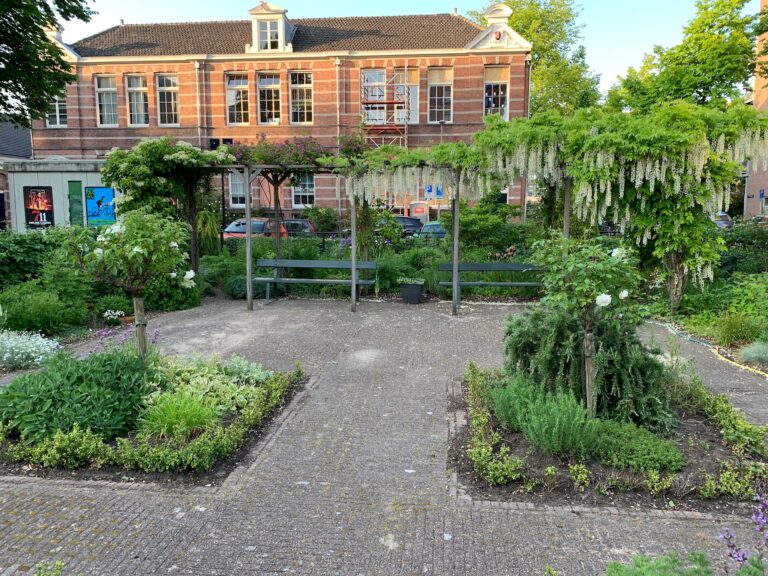
Real estate developers and community members alike appreciate the added value of agrihoods that are established around vegetable gardens and small farms.
What has the potential to bring a community together, increase its resilience, boost sustainability, make its residents healthier, and even add to property values? Some real estate developers see locally grown food as just such a catalyst and are embracing a new model known as “agrihoods.”
In the U.S., we often take food for granted, especially where it’s grown and how it’s sourced. But some housing planners are learning that food can have a big impact on the success of a new residential development, particularly in challenging economic times. In years past, developers often built high-end housing around golf courses. Now some builders are instead designing around orchards, vineyards, cow pastures, vegetable gardens and even organic farms.
Agrihoods Redefine Community
Kukuiula, a resort community on the island of Kauai in Hawaii, has, as do most luxury residential resorts, a golf course, clubhouse and spa. Kukuiula also has a less-common feature: a 10-acre farm where bananas, papayas, pineapples, arugula, chard, herbs and breadfruit are grown. The farm has a small staff, but many residents get their hands dirty by volunteering at the farm, while others simply sit back and enjoy the farm-to-table dinners.
“It’s humbling to see how an amenity as simple and relatively inexpensive as a small farm can have such a big impact on a new community,” says Brent Herrington, the developer of Kukuiula.
Agrihoods Sprout Up Everywhere
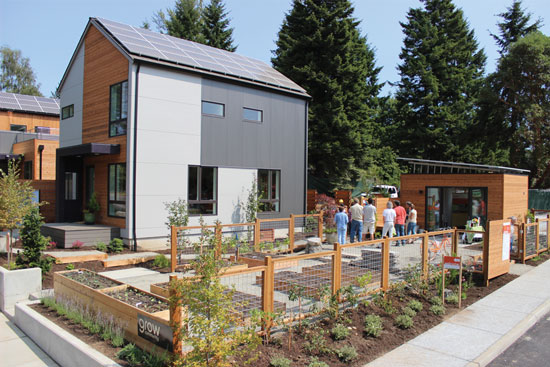
Sibella Kraus, president of the nonprofit group Sustainable Agriculture Education (SAGE) in Berkeley, Calif., says, “Urban agriculture is not just a way to grow vegetables, but also a way to strengthen community.” This is exactly what Marja Preston, senior director of development at Grow Community on Bainbridge Island, Wash., says she found when she clustered 24 new single-family homes around four shared gardening spaces, which help members of the community accomplish one of their stated goals: getting to know their neighbors well.
The success of these and other food-based developments has persuaded more developers to establish agrihoods. The trends we’re seeing here at the Urban Land Institute (ULI) suggest that a mindset shift is underway, wherein having gardens and small farms in neighborhoods isn’t a nuisance but an amenity.





