Is Your Donkey in Their Database?
Should a list of livestock owners compiled by the federal government be confidential?
October/November 2008
By Jessie Fetterling
 |
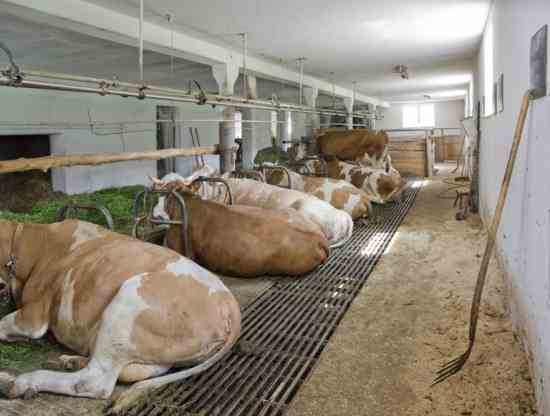
The USDA is compiling a list of contact info for livestock owners, known as the National Premises Information Repository. Although the NAIS program is technically “voluntary,” many say they’ve been entered into the Repository without their consent.
PHOTODISC
|
Mary-Louise Zanoni, a freelance writer from St. Lawrence County, N.Y., is taking the U.S. Department of Agriculture (USDA) to court in an attempt to gain access to information collected as part of the National Animal Identification System (NAIS). The USDA is compiling a list of contact info for livestock owners, known as the National Premises Information Repository. Although the NAIS program is technically “voluntary,” many say they’ve been entered into the Repository without their consent.
RELATED CONTENT
One of the best ways to avoid the misery of poison ivy or poison oak exposure is to learn how to re...
If you’ve visited your local feed dealer or veterinarian recently, or read any of the dozens of liv...
Honest To Goodness Information December/January 1995 BITS AND PIECES Here at MOTHER we get mail—lot...
Here are fifteen no-cost ways to find out more about the foods you eat....
How to survey the soil, read a topographic map and gather valuable information from the resources a...
Access to records would allow farmers to see whether or not their names are on the list, and if they were in fact removed upon request. The USDA refused to allow Zanoni access, citing an exemption through the Freedom of Information Act that states an agency can withhold “personnel and medical files and similar files, the disclosure of which would constitute a clearly unwarranted invasion of personal privacy.” Zanoni says that the privacy exemption does not apply to her request. The USDA plans to use the Repository as the first step in the enactment of the NAIS program. The second step will involve assigning a 15-digit ID number to every animal on the premises, along with a radio frequency identification microchip.
It is the USDA’s goal to create a system by which the origin and movement of every livestock animal in the United States (even those kept as pets or 4-H projects) can be monitored in order to trace disease outbreaks. Concerns about the time, paperwork and costs involved — especially for small farmers — along with doubts about the program’s efficacy, have produced a wave of opposition.
To read more about NAIS, check out The Truth About the Animal ID Plan. — Mother