
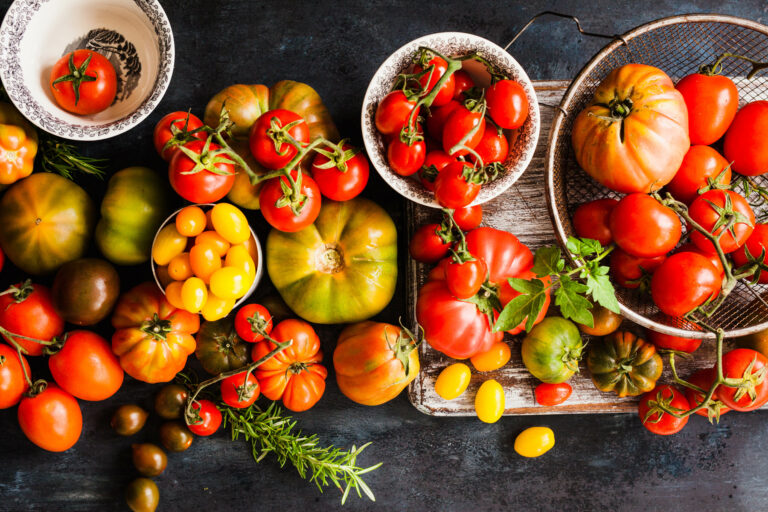
The surest way to have a successful tomato crop is to grow varieties with a proven track record in organic gardens in your area. We conducted an online survey asking readers about the best tomato varieties for their regions, and we got even more great information than we expected!
In addition to naming names, our 2,000 respondents offered up a treasure-trove of useful tips. Some of the best of these appear in the regional lists of top tomato varieties below. Additional regional tomato-growing tips appear on our regional gardening pages. We broke down your feedback into the lists below.

- North America’s Top 30
- Midwest
- Mid-Atlantic
- Interior South
- Pacific Northwest
- North Central & Rockies
- Gulf Coast
- Southwest
- Northeast
Tomato Lover’s Profile
Our survey was open to anyone. Many members of the MOTHER EARTH NEWS Gardening Advisory Board weighed in on what they view as the best tomatoes, as did folks from Seed Savers Exchange and various online gardening forums. Many gardeners with only a few years of experience didn’t suggest varieties, but instead begged for help! Gardeners with more experience shared many variety recommendations.

Many gardeners had common purposes, with more than 44 percent of respondents saying they hoped to grow enough tomatoes “to eat fresh, preserve and share.” More than 66 percent use only organic methods, with compost and aged manure the top choices for fertilizers. About half of the survey-takers reported that tomatoes are easy or moderately easy for them to grow, with more difficulty noted in extreme climates.
Tomato Varieties and Types
It was easy to tally up scores for well-known varieties such as ‘Amish Paste’ or ‘Early Girl,’ but several variety groups presented identification problems. As I combed through the lists, “beefsteak” and “roma” formed large generic categories, so they are treated that way for ranking purposes. ‘Brandywine’ should be considered a generic category as well, because it was impossible to identify strains that vary in color from pink to yellow to black.

For organizational purposes, the survey sorted tomatoes into the following types:
- Slicing Tomatoes: main-crop tomatoes for eating fresh and making sauce
- Cherry Tomatoes: marble-sized fruits in a rainbow of colors, for eating fresh or drying
- Paste or Canning Tomatoes: thick-fleshed varieties for canning or drying
- Really Big Tomatoes: huge fruits that often weigh more than a pound
- Saladette or Pear Tomatoes: small fruits, great eaten fresh and increasingly popular for drying
- Non-red Tomatoes: varieties that ripen to yellow, orange, green, purple, black or striped
Note that a tomato can fall into more than one category — for example, a great slicing tomato might also be a non-red.
What’s Important?

Respondents rated various tomato characteristics in terms of importance. Here are your five highest priorities:
- Flavor
- Disease resistance
- Open-pollinated
- High yields
- Heat resistance
North America’s Top 30
The top 30 varieties listed below show a mix of hybrid (F1) and open-pollinated (OP) varieties. Many respondents declared an “heirlooms only” stance on tomatoes, especially in climates that are kind to tomatoes. Disease-resistant hybrids won more favor in stressful growing situations. Additionally, our survey showed that interest in better disease resistance increases with years of tomato-growing experience.

Please note that both hybrid and open-pollinated versions are available for the ‘Beefsteak,’ ‘Sungold,’ ‘Roma’ and ‘San Marzano’ varieties.
Top 30 Tomato Varieties
Types of Tomatoes:
OP = Open Pollinated, F1 = Hybrid
Disease Resistance:
V = Verticillium Wilt, F = Fusarium Wilt,
N = Nematodes, T = Tobacco Mosaic Virus,
A = Alternaria, St = Gray Leaf Spot

Slicer Tomatoes
1. ‘Brandywine’ (OP, 90 days)
2. ‘Early Girl’ (F1, VF, 75 days)
3. ‘Better Boy’ (F1, VFN, 75 days)
4. ‘Beefsteak’ (F1, OP, 80 to 90 days)
5. ‘Cherokee Purple’ (OP, 90 days)
Others of Note: ‘Big Boy,’ ‘Celebrity,’ ‘Rutgers,’ ‘Mortgage Lifter,’ ‘Big Beef’
Cherry Tomatoes
1. ‘Super Sweet 100’ (F1, VF, 65 days)
2. ‘Sungold’ (F1, OP, VFT, 57 days)
3. ‘Black Cherry’ (OP, 65 days)
4. ‘Sweet Million’ (F1, VFNTSt, 65 days)
5. ‘Yellow Pear’ (OP, 70 days)
Others of Note: ‘Riesenstraube,’ ‘Snow White,’ ‘Gardener’s Delight’
Paste or Canning Tomatoes
1. ‘Roma’ (F1, VFN, OP, 75 days)
2. ‘Amish Paste’ (OP, 74 to 80 days)
3. ‘San Marzano’ (F1, VF, OP, 78 days)
4. ‘Opalka’ (OP, 85 days)
5. ‘Viva Italia’ (F1, VFNA, 75 days)
Others of Note: ‘Polish Linguisa,’ ‘Rutgers,’ ‘Striped/Speckled Roman’
Really Big Tomatoes
1. ‘Beefsteak’ (F1, OP, 80 to 90 days)
2. ‘Brandywine’ (OP, 90 days)
3. ‘Big Boy’ (F1, 78 days)
4. ‘Mortgage Lifter’ (OP, 80 days)
5. ‘Better Boy’ (F1, VFN, 75 days)
Others of Note: ‘German Pink,’ ‘Beefmaster,’ ‘Belgian Giant,’ ‘Park’s Whopper,’ ‘Red Oxheart’
Saladette or Pear Tomatoes
1. ‘Yellow Pear’ (OP, 70 days)
2. ‘Juliet’ (F1, blight tolerance, 60 days)
3. ‘Roma’ (F1, VFN, OP, 75 days)
4. ‘Red Pear’ (OP, 70 days)
5. ‘Stupice’ (OP, 55 to 60 days)
Others of Note: ‘Red Fig,’ ‘Flamme,’ ‘Principe Borghese’
Non-Red Tomatoes
1. ‘Cherokee Purple’ (OP, 90 days)
2. ‘Green Zebra’ (OP, 78 days)
3. ‘Black Krim’ (OP, 74 to 80 days)
4. ‘Lemon Boy’ (F1, VFN, 72 days)
5. ‘Pineapple’ (OP, 85 days)
Others of Note: ‘German Green,’ ‘Kellogg’s Breakfast,’ ‘Mr. Stripey’

Best in the Midwest: Holding Up to Hot Summers
Hot summer weather brings out the best in large-fruited, open-pollinated varieties, which are often described as easy to grow in the Central/Midwest region. Just the same, many gardeners allow space for a few dependable hybrids such as crack-resistant ‘Jet Star’ tomatoes, which are highly respected for their flavor. Bred and refined in Illinois, the ‘Striped Roman’ paste tomato is also developing a following in the Heartland.

Slicer Tomatoes
1. ‘Brandywine’
2. ‘Early Girl’
3. ‘Cherokee Purple’
Also: ‘Big Boy,’ ‘Better Boy,’ ‘Beefsteak’
Cherry Tomatoes
1. ‘Super Sweet 100’
2. ‘Black Cherry’
3. ‘Sungold’
Also: ‘Sweet Million,’ ‘Riesenstraube’
Paste or Canning Tomatoes
1. ‘Roma’
2. ‘Amish Paste’
3. ‘San Marzano’
Also: ‘Opalka,’ ‘Striped Roman’
Really Big Tomatoes
1. ‘Beefsteak’
2. ‘Brandywine’
3. ‘Mortgage Lifter’
Also: ‘Big Boy,’ ‘Better Boy’
Saladette or Pear Tomatoes
1. ‘Yellow Pear’
2. ‘Roma’
3. ‘Juliet’
Also: ‘Roma,’ ‘Principe Borghese’
Non-Red Tomatoes
1. ‘Cherokee Purple’
2. ‘Black Krim’
3. ‘Green Zebra’
Also: ‘Pineapple,’ ‘Kellogg’s Breakfast’
Midwest Gardening Advice
“A sure stopper for tomato hornworms is borage. Plant it right in among your tomato plants and you will not have to worry about tomato hornworms in that bed.” — Valerie Shoopman, Warsaw, Missouri
“Mulch, mulch, mulch to keep soil off plants and preserve moisture.” — Lynn Tschumper, Stoddard, Wisconsin
“When tomatoes are ripe, start eating them for breakfast, lunch and supper and every minute in between. The season will be over before you know it.” — Pat Kennedy, Bath, Ohio
Best in the Mid-Atlantic: Hybrids and Heirlooms
The mid-Atlantic is the home territory of two top heirlooms — ‘Amish Paste’ and ‘Brandywine’ tomatoes — that are well-represented in these gardens. Adding a cherry tomato and an ‘Early Girl’ makes it easier to wait for later-maturing varieties. A balance of hybrids and heirlooms gives you earliness, disease resistance and great flavor. Further diversify by setting out some plants early and others later. That way, you will have vigorous young plants in late summer, when pest and disease pressure can become severe.

Slicer Tomatoes
1. ‘Brandywine’
2. ‘Early Girl’
3. ‘Better Boy’
Also: ‘Big Boy,’ ‘Beefsteak’
Cherry Tomatoes
1. ‘Super Sweet 100’
2. ‘Sungold’
3. ‘Sweet Million’
Also: ‘Black Cherry,’ ‘Riesenstraube’
Paste or Canning Tomatoes
1. ‘Roma’
2. ‘Amish Paste’
3. ‘San Marzano’
Also: ‘Opalka,’ ‘Polish Linguisa’
Really Big Tomatoes
1. ‘Beefsteak’
2. ‘Brandywine’
3. ‘Big Boy’
Also: ‘Mortgage Lifter,’ ‘Better Boy’
Saladette or Pear Tomatoes
1. ‘Yellow Pear’
2. ‘Juliet’
3. ‘Roma’
Also: ‘Cupid,’ ‘Principe Borghese’
Non-Red Tomatoes
1. ‘Cherokee Purple’
2. ‘Black Krim’
3. ‘Lemon Boy’
Mid-Atlantic Gardening Advice
“Setting out plants several weeks apart gives me a longer tomato growing season.” — Nancy Letzo, Levittown, Pennsylvania
“I use seaweed spray several times early in the season. This develops bigger leaves, promotes overall growth and provides some disease protection.” — Mike Jurek, Oak Ridge, New Jersey
“Preventing problems is a nonstop job. We rotate, grow cover crops, keep the garden free of weeds and debris, and companion plant with aromatic herbs and flowers to attract beneficial insects.” — Liz Alakszay, West Chester, Pennsylvania
Best in the Interior South: Disease-resistant Picks
Released in 1971, ‘Better Boy’ tomatoes are a Southern classic because of their flavor, vigor, and tendency to produce bumper crops, no matter what the season brings. Warm, humid summers make disease resistance crucial for Southern-grown tomatoes. It can be found in vigorous hybrids as well as many smaller-fruited heirlooms, such as ‘Amish Paste,’ ‘Stupice,’ and ‘Black Cherry’ tomatoes. ‘Stupice’ has earned high ratings for flavor and productivity in organic field trials conducted by North Carolina State University.
Slicer Tomatoes
1. ‘Better Boy’
2. ‘Brandywine’
3. ‘Big Boy’
Also: ‘Celebrity,’ ‘Cherokee Purple,’ ‘Early Girl’
Cherry Tomatoes
1. ‘Super Sweet 100’
2. ‘Sungold’
3. ‘Black Cherry’
Also: ‘Sweet Million’
Paste or Canning Tomatoes
1. ‘Roma’
2. ‘Amish Paste’
3. ‘San Marzano’
Also: ‘Opalka’
Really Big Tomatoes
1. ‘Beefsteak’
2. ‘Mortgage Lifter’
3. ‘Brandywine’
Also: ‘Park’s Whopper,’ ‘Better Boy’
Saladette or Pear Tomatoes
1. ‘Yellow Pear’
2. ‘Roma’
3. ‘Juliet’
Also: ‘Red Pear,’ ‘Red Fig’
Non-Red Tomatoes
1. ‘Cherokee Purple’
2. ‘Black Krim’
3. ‘Green Zebra’
Also: ‘Lemon Boy,’ ‘Persimmon’
Interior South Gardening Advice
“Move your veggies each year, especially tomatoes. They will tell you where they like to be in the garden.” — Michael Rock, Spartanburg, South Carolina
“I start seeds inside in February. In early March, when I’m sure I’ll have enough seedlings to transplant, I scatter some extra seeds outside in the garden bed. The germination rate is low, but any of those seeds that sprout and grow seem to be the best producers.” — K. Hulen, Collierville, Tennessee
“My tomatoes grow great in raised beds. My old-timer neighbors admire my tomatoes and have built their own raised beds.” — Kimberley Garrison, York, South Carolina
Best in the Pacific Northwest: Small Fruits Seeking Sun
Tomatoes must often play hide-and-seek with warm sun in the Pacific Northwest region, where ‘Early Girl’ held a big lead in the slicing category. Small-fruited varieties such as ‘Super Sweet 100’ and ‘Stupice’ get plenty of respect here because they are so dependable. Plus, many gardeners have discovered the fun of drying elongated grape-shaped tomatoes such as ‘Juliet’ and ‘Principe Borghese.’

Slicer Tomatoes
1. ‘Early Girl’
2. ‘Beefsteak’
3. ‘Stupice’
Also: ‘Big Beef,’ ‘Cherokee Purple,’ ‘Willamette’
Cherry Tomatoes
1. ‘Super Sweet 100’
2. ‘Sungold’
3. ‘Sweet Million’
Also: ‘Black Cherry,’ ‘Gold Nugget’
Paste or Canning Tomatoes
1. ‘Roma’
2. ‘San Marzano’
3. ‘Amish Paste’
Also: ‘Viva Italia,’ ‘Principe Borghese’
Really Big Tomatoes
1. ‘Brandywine’
2. ‘Beefsteak’
3. ‘Mortgage Lifter’
Also: ‘Early Girl,’ ‘Big Beef,’ ‘Goliath,’ ‘Hillbilly’
Saladette or Pear Tomatoes
1. ‘Yellow Pear’
2. ‘Stupice’
3. ‘Glacier’
Also: ‘Juliet,’ ‘Principe Borghese’
Non-Red Tomatoes
1. ‘Green Zebra’
2. ‘Cherokee Purple’
3. ‘Black Krim’
Also: ‘Taxi,’ ‘Jubilee’
Pacific Northwest Gardening Advice
“I plant tomatoes in large black nursery pots with the bottoms cut out, sunk a few inches into the ground. To protect the plants until the weather warms, I use Wall O’ Waters or make my own cages from clear plastic sheeting.” — Dave Sexton, Portland, Oregon
“About a month before transplanting, I cover the tomato beds with black plastic to warm the soil and take it from soggy to nicely moist. I also add heat via Wall O’ Waters, plastic hoop houses or row covers wrapped around the tomato cages.” — Carrie Dennett, Seattle, Washington
“Harvest fruit as soon as it’s ripe to prevent draining energy from plants and encouraging pests. Plant a few extra plants and donate the extra produce to the local food bank.” — Jim and Kennette Orsingher, Roseburg, Oregon
Best in the North Central and Rockies: Fast-maturing Fruits
Short summers that quickly change from cold to hot and back again call for resilient cherry tomatoes and at least one ‘Early Girl,’ which was often first on the list of many experienced tomato gardeners in this region. Several folks suggested skipping really big tomatoes in favor of smaller-fruited varieties that mature faster, such as ‘Stupice,’ ‘Juliet,’ and ‘Yellow Pear’ tomatoes.

Slicer Tomatoes
1. ‘Beefsteak’
2. ‘Early Girl’
3. ‘Brandywine’
Also: ‘Celebrity,’ ‘Cherokee Purple,’ ‘Better Boy’
Cherry Tomatoes
1. ‘Super Sweet 100’
2. ‘Sungold’
3. ‘Black Cherry’
Also: ‘Gardener’s Delight’
Paste or Canning Tomatoes
1. ‘Roma’
2. ‘Amish Paste’
3. ‘San Marzano’
Also: ‘Opalka,’ ‘Viva Italia’
Really Big Tomatoes
1. ‘Brandywine’
2. ‘Beefsteak’
3. ‘Big Boy’
Also: ‘Beefmaster,’ ‘Caspian Pink,’ ‘Mortgage Lifter’
Saladette or Pear Tomatoes
1. ‘Yellow Pear’
2. ‘Stupice’
3. ‘Red Fig’
Also: ‘Juliet,’ ‘Roma’
Non-Red Tomatoes
1. ‘Cherokee Purple’
2. ‘Green Zebra’
3. ‘Taxi’
Also: ‘Black Krim,’ ‘Yellow Pear’
North Central and Rockies Gardening Advice
“Be mindful of frost dates and look out for hailstorms.” — Catherine Albert, Arvada, Colorado
“Paint gallon milk jugs black and fill them with water. Use the jugs to surround your transplants. The sun will warm the water in the jugs, which will give off heat at night.” — Scott Giles, McGill, Nevada
“Our soil is short of calcium, so I put dried eggshells under each plant as they’re put in the ground: no blossom end rot anymore.” — Karen Dykstra, Thompson Falls, Montana
Best on the Gulf Coast: Standing Up to Heat and Humidity
Spring and fall, varieties that hold up to heat and humidity earn their spots in Gulf Coast gardens. Large-fruited cherry varieties or vigorous ‘Juliet’ help guarantee a successful season, but be careful with heirlooms. ‘Arkansas Traveler’ and ‘Creole’ tomatoes set fruit well in humid heat compared with many other open-pollinated varieties.

Slicer Tomatoes
1. ‘Better Boy’
2. ‘Big Boy’
3. ‘Brandywine’
Also: ‘Celebrity,’ ‘Early Girl,’ ‘Arkansas Traveler’
Cherry Tomatoes
1. ‘Super Sweet 100’
2. ‘Black Cherry’
3. ‘Yellow Pear’
Also: ‘Sweet Chelsea,’ ‘Sungold’
Paste or Canning Tomatoes
1. ‘Roma’
2. ‘Amish Paste’
3. ‘San Marzano’
Also: ‘Opalka,’ ‘Polish Linguisa’
Really Big Tomatoes
1. ‘Beefsteak’
2. ‘Big Boy’
3. ‘Better Boy’
Also: ‘Beefmaster,’ ‘Red Oxheart,’ ‘Floradade’
Saladette or Pear Tomatoes
1. ‘Yellow Pear’
2. ‘Juliet’
3. ‘Porter’
Non-Red Tomatoes
1. ‘Cherokee Purple’
2. ‘Yellow Pear’
3. ‘Pineapple’
Gulf Coast Gardening Advice
“Be vigilant, be sure to tend your garden every day, and catch problems early.” — Bob Schultz, San Antonio, Texas
“To prevent diseases, make sure your plants have good support. Trim the plants so the lowest leaves don’t touch the ground, and water at the base so the leaves stay dry.” — C. D. Kross, DeFuniak Springs, Florida
“I’m lucky to live where there are two tomato seasons. Regional varieties such as ‘Creole’ and ‘Gulf Coast Market’ have what it takes to be successful here.” — Johannah Foss, Houston, Texas
Best in the Southwest: Heat-Tolerant Varieties
The huge and diverse Southwest region often presents tough challenges for tomatoes, with gardeners in arid climates reporting problems finding varieties that can take the heat. Small-fruited cherry tomatoes deliver no matter what, and they are the most popular type of tomato in the region. Particularly in areas with little rain, you will need to water larger slicing tomatoes just right to prevent blossom end rot and cracking. Using plenty of mulch will make this task much easier.

Slicer Tomatoes
1. ‘Early Girl’
2. ‘Brandywine’
3. ‘Beefsteak’
Also: ‘Better Boy,’ ‘Big Beef,’ ‘Paul Robeson,’ ‘Rutgers’
Cherry Tomatoes
1. ‘Super Sweet 100’
2. ‘Sungold’
3. ‘Black Cherry’
Also: ‘Yellow Pear,’ ‘Juliet,’ ‘Patio’
Paste or Canning Tomatoes
1. ‘Roma’
2. ‘San Marzano’
3. ‘Amish Paste’
Also: ‘Opalka,’ ‘Teton de Venus’
Really Big Tomatoes
1. ‘Beefsteak’
2. ‘Big Boy’
3. ‘Mortgage Lifter’
Also: ‘Brandywine,’ ‘Dr. Wyche’s Yellow’
Saladette or Pear Tomatoes
1. ‘Yellow Pear’
2. ‘Japanese Black Trifle’
3. ‘Stupice’
Non-Red Tomatoes
1. ‘Green Zebra’
2. ‘Cherokee Purple’
3. ‘Lemon Boy’
Southwest Gardening Advice
“To escape blight, we plant tomatoes in June. Also, keep the growing area clean.” — Susan Guarino, Half Moon Bay, California
“To prevent disease problems, drip irrigate and cut off the lowest foliage so it doesn’t pick up diseases from the soil. Never let fruit rot on the vine or on the ground.” — Stella Bloom, San Diego, California
“I live at 6,700 feet altitude, with hot days and very cool nights. Slicing tomatoes usually are not ready until mid-September, but cherry and pear tomatoes come on in August.” — Diana Calkins, High Rolls, New Mexico
Best in the Northeast: Beating Blight
“We got late blight and lost many plants.” This was a familiar refrain among comments from the blight-stricken New England and Maritime Canada region, but we also received reports of ‘Juliet’ and ‘Super Sweet 100’ putting up valiant fights. As for late blight, a couple of respondents suggested prayer and patience, noting that enough cool rain will melt down the finest tomato.

Slicer Tomatoes
1. ‘Brandywine’
2. ‘Early Girl’
3. ‘Beefsteak’
Also: ‘Big Boy,’ ‘Celebrity,’ ‘Cherokee Purple’
Cherry Tomatoes
1. ‘Sungold’
2. ‘Super Sweet 100’
3. ‘Black Cherry’
Also: ‘Gold Nugget’
Paste or Canning Tomatoes
1. ‘Roma’
2. ‘Amish Paste’
3. ‘San Marzano’
Also: ‘Orange Banana,’ ‘Opalka’
Really Big Tomatoes
1. ‘Brandywine’
2. ‘Big Boy’
3. ‘Beefsteak’
Also: ‘Mortgage Lifter,’ ‘Beefmaster’
Saladette or Pear Tomatoes
1. ‘Yellow Pear’
2. ‘Juliet’
3. ‘Flamme’
Also: ‘New Zealand Pink Pear’
Non-Red Tomatoes
1. ‘Cherokee Purple’
2. ‘Black Krim’
3. ‘Green Zebra’
Also: ‘Pineapple,’ ‘Lemon Boy’
Northeast Gardening Advice
“I’m torn between the disease resistance and high yield of hybrids versus the beauty, variety and seed-saving option of heirlooms. I settle for a little bit of both.” — Kelly Pillsbury, Westport, Massachusetts
“I’ve experimented with a variety of tomatoes, but, for our short growing season, I find that cherry tomatoes reliably produce ripe tomatoes before frost, and all varieties are tasty. I use them in everything from sauce to sandwiches.” — Flora Johnson, Stewiacke, Nova Scotia
“Taste is very personal, so what I adore you may loathe. Flavor and productivity also vary due to seasonal conditions, so give a variety two or three growing seasons before deciding if it’s a keeper.” — Donna Socci-Brown, Stratford, Connecticut
Contributing editor Barbara Pleasant gardens in southwest Virginia, where she grows vegetables, herbs, fruits, flowers and a few lucky chickens.





