ImagesMy - stock.adobe.com
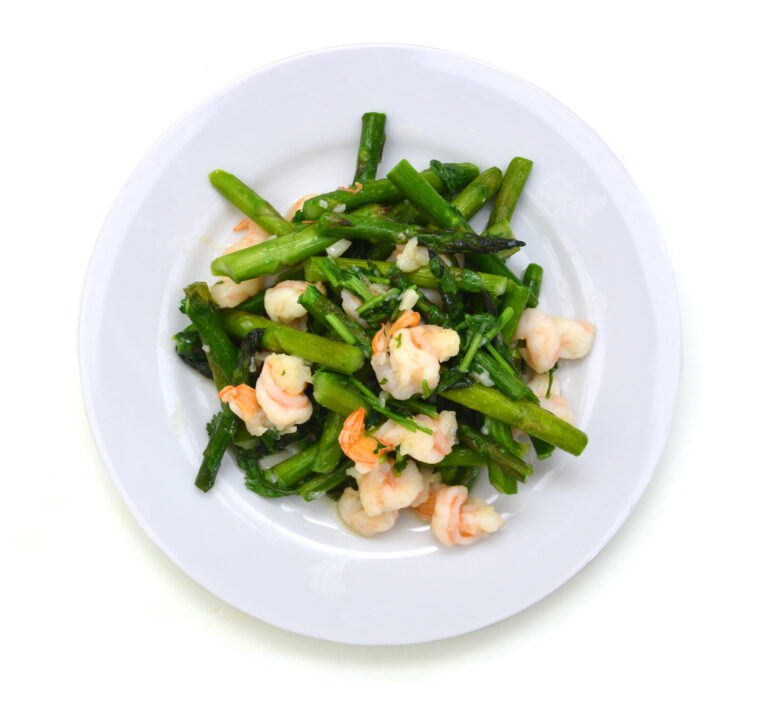
Fried shrimp with asparagus in plate on white
4 salads
SERVINGS
Topping asparagus and lettuce with shrimp turns a salad into a luxurious appetizer, or even a light meal in itself. I find this Asparagus and Shrimp Salad with Honey-Saffron Dressing a good way to end the day in early summer, topped with a honey and saffron dressing that lends a bright golden color as well as rich flavor. You can sprinkle this dish with either scallions or chives. This dressing is also good on cold lobster or scallops.
Ingredients
- About 32 medium-sized asparagus spears
- 32 raw shrimp, deveined, with head and shells removed
- 3 tbsp olive oil
- 1 large butterhead lettuce, washed and torn into pieces
- 2/3 cup Honey-Saffron Dressing
- 2 scallions, green tops only
- Coarse sea salt
- Freshly ground black pepper
Honey-Saffron Dressing
- 2 tbsp white wine vinegar
- 2 tbsp honey
- 1/4 tsp saffron
- 6 tbsp olive oil
Directions
- Trim the asparagus to about 6 inches long, and steam or simmer for 8 minutes or until just tender. Blanch by plunging into cold water to stop cooking, drain and set aside.
- Dry the shrimp thoroughly. Heat the olive oil in a small saucepan until fragrant and medium-hot. Using a pair of long tongs to protect yourself from spatters, quick-sauté the shrimp in batches, dropping in 6 to 8 at a time. Don’t crowd the pan. Flip them with the tongs, cooking only until translucent, about 1-1/2 minutes per side. Drain on paper towels. Both the asparagus and the shrimp can be cooked ahead and refrigerated for a short time until ready to serve.
- Distribute the lettuce among four plates. Arrange the asparagus on top, then the shrimp. Pour the dressing over all, letting it make a bright yellow pool around the edges, then scatter on the scallions or chives. Add salt and pepper to taste.
- To make the Honey-Saffron Dressing: Heat the vinegar, honey and saffron together in a small saucepan over low heat, just enough to liquefy the honey. Pour into a small, lidded glass jar, add the olive oil, and then cool to room temperature. Shake to mix thoroughly before drizzling over the salad.
- Want to learn more about cooking with asparagus and chives? Read Spring's Sentinels: How to Grow and Cook Asparagus and Chives for more tips and recipes.
- Esteemed garden writer Barbara Damrosch farms and writes with her husband, Eliot Coleman, at Four Season Farm in Harborside, Maine. Find even more asparagus recipes in her latest book, The Four Season Farm Gardener’s Cookbook.