
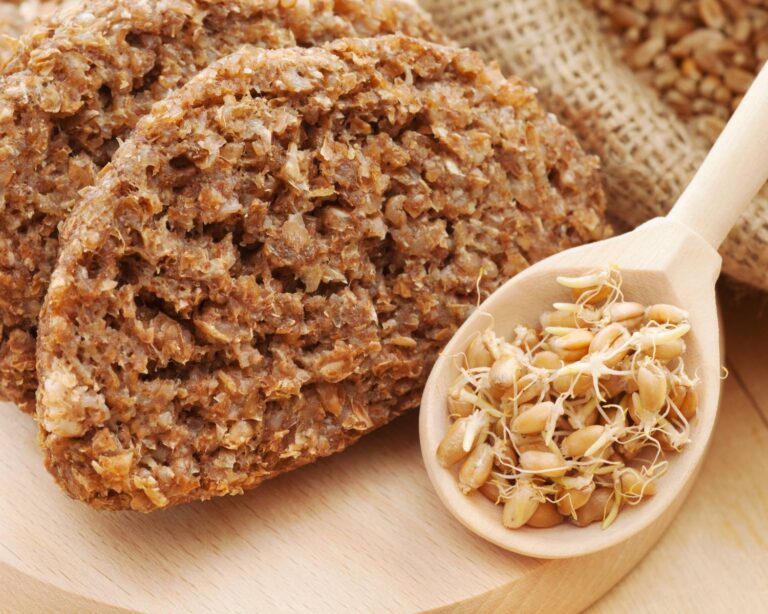
Learn how to make sprouted grain bread with this ancient Essene bread recipe.
Of all the known breads, the simplest and possibly the most nutritious is Essene whole grain bread. An ancient recipe for this unusual loaf appears in the first century Aramaic manuscript entitled The Essene Gospel of Peace (from which the bread derives its name). It dates back to prehistoric days when wafers made from a grain and water paste were cooked on sun-heated stones.
There’s not much difference between the baking technique used by the monastic brotherhood 2,000 years ago and our modern method. Both result in a round, flattened loaf — rather like a sweet, moist dessert bread or cake — containing all of the virtues of unadulterated sprouted grain, its sole ingredient. The recipe offered below is adapted from Uprisings: The Whole Grain Bakers’ Book, a compilation of bakers’ recipes inspired by the Cooperative Whole Grain Educational Association Conference of 1980.
Sprouting Wheat Grains
To sprout your grain, you’ll need a wide-mouthed glass jar (or a large plastic tub or soup pot) that has a screw-on lid with holes punched in it or a piece of fine screening, cheesecloth, or netting secured to the top with a strong rubber band. A meat grinder (or a food processor or hand-cranked grain mill), a cookie sheet, and an oven will take care of the rest.
Hard red winter wheat is a good choice for sprouting. Just be sure to buy uncooked, unsprayed, whole grain berries. Two cups of wheat yields about four cups of dough — enough for one loaf — so purchase accordingly.
4-Step Essene Bread Recipe
Supplies:
- wide-mouthed glass jar
- rubberband
- cheesecloth
- oiled cookie sheet
- grain grinder or food processor
- wire racks for cooling bread
Ingredients:
- whole wheat berries (hard red winter wheat recommended)
- water
- nuts or dried fruits, if desired
1. Sprout Wheat Grains for Sprouted Flour
Begin by measuring the desired amount of whole wheat berries (see Sprouting Wheat Grains above for guidance on specific amounts) into the sprouting jar. Soak the berries overnight, using twice their volume of water. The next morning, drain off the liquid (which is rich in nutrients and can be added to soups, drinks, etc.), then set the jar in a dark place and rinse the berries with cool water at least twice a day. Drain the jar thoroughly after each rinsing, and shake it occasionally to prevent matting and spoilage.
When the sprout tails are about twice as long as the berries and have a sweet taste (try them!), they’re ready to use. This takes three or four days, depending on the temperature, humidity, and so on. Skip the last rinse before grinding so that the berries won’t be too moist to use.
2. Make Sprouted Flour Bread Dough
Next, oil the grinder parts and put the sprouts through the grain grinder. The resulting dough should be juicy, sticky, mottled light and dark, and rather like raw hamburger in consistency. If you think nuts or fruit would give some extra zing to the finished product, now’s the time to put them in. Whatever dried fruits you plan to add should first be soaked in hot water for 20 to 30 minutes.
3. Shape Your Sprouted Grain Loaves
Ready? Now, wet your hands and take up a quantity of dough. One handful makes a nice roll, while a double handful is good for a small loaf. Work the dough briefly to get out any air pockets, then shape it into circular, somewhat flattened loaves. Place them on an oiled cookie sheet.
4. Bake Sprouted Grain Bread
Bake for approximately 2-1/2 hours at 250 degrees Fahrenheit, until the outside is firm–but not hard–and the bottom springs back slightly after a gentle prod with the thumb. The inside will be quite soft, developing a firmer texture upon cooling. (To prevent the loaves from drying out, some bakeries spray them with water before and during baking, or place a pan of water on another shelf in the oven while the bread is baking.)
Allow the loaves to cool on wire racks and then store them in sealed plastic bags. If you’re going to eat your Essene sprouted grain bread within three or four days, don’t refrigerate it, as it will stay moist if stored at room temperature. Refrigerated, it will keep up to four weeks, and the bread can also be frozen.
That’s all there is to it. Sprout, grind, shape, bake and enjoy! One might say that it’s the very essene — excuse us, essence — of simplicity!







